Tag Archives: short stories

An Interview with Monica McFawn

8 Jan
Monica McFawn won the 2014 Flannery O'Connor Award for Short Fiction for her story collection Bright Shards of Someplace Else.

Monica McFawn won the 2014 Flannery O’Connor Award for Short Fiction for her story collection Bright Shards of Someplace Else.

Monica McFawn is a writer and playwright living in Michigan. Her short story collection, Bright Shards of Someplace Else, won the Flannery O’Connor Award for Short Fiction. She is also the author of a hybrid chapbook, “A Catalogue of Rare Moments,” and her screenplays and plays have had readings in New York and Chicago. She teaches writing at Grand Valley State University and trains her Welsh Cob cross pony in dressage and jumping.

To read McFawn’s story, “Out of the Mouths of Babes” and an exercise on using danger to create plot, click here.

In this interview, McFawn discusses the difference between “writing my way in” to a story and outlining it in advance, the challenge of exposition, and avoiding long volleys of dialogue.

Michael Noll

I’m curious about the way this story was written. It has such a clear progression: the boy’s mother tells the babysitter, Grace, not to let him talk on the phone, and then Grace lets him do just that four times, with each call having higher stakes. The structure is so straightforward and clear that I can’t imagine the story existing any other way. Did you have this structure in mind from the beginning, or did you have to write your way into it?

Monica McFawn

The structure was very carefully mapped out before I wrote the bulk of the story. I did it out of desperation. I had been trying to “write my way into” the stories I was writing for years, mostly because that’s what I thought most writers did. You hear so many writers talk that way, i.e. “I just start writing and see where it goes!” “My characters just take over!” I thought that was how it was done, and I believed that there was something stiff or false about plotting a story beforehand.

But when I actually tried the “write my way in” method, my stories would end up shapeless, overlong, and unfinished. One story in particular had gotten so bloated and meandering that I made myself set it aside and start a new story. This time, I thought to myself, I’ll do the exact opposite: I’ll plot it out beforehand. If it’s stilted as a result, who cares? At least I can finish something this way.

I like making tables, so I made a table in Word, then populated it with different phone calls and different recipients. I spent some time experimenting with the table—adding calls, deleting them, and just thinking about how to escalate the calls throughout the story. Using a table felt very businesslike, far from the mystical experience I thought writing stories should be. I worried that writing a story this way might prevent me from experiencing any surprise or serendipity, but in fact it was the opposite. The clear structure was freeing, and I found plenty of surprises in the details.

Michael Noll

The last two phone calls are made to Grace’s boyfriend/private investigator and to her sister. In order to understand these calls, we need to know certain things about a lawsuit and the family drama that led to it. The problem is that the information needs to be revealed before the calls are made, and this is difficult because it can’t come out in dialogue because there are only two characters in the story, and one of them spends the entire time on the phone. So, I really admire how you handle this problem, the way you reveal this back story through Grace’s thoughts in a way that seems perfectly natural. Was this a difficult thing to pull off?

Monica McFawn

"Bright Shards of Someplace Else," the debut story collection from Monica McFawn, won the 2014 Flannery O'Connor Award.

Bright Shards of Someplace Else, the debut story collection from Monica McFawn, is populated, according to National Book Award winner Jaimy Gordon, ‘a strange and wondrous band of misfits, isolatos, geniuses and obsessives of every stripe.”

I think exposition is the biggest challenge of writing short stories. There is so little space for backstory, yet often the backstory is critically important to what’s driving the character in the present moment. It’s something I’ve studied obsessively in the short stories and novels I’ve read. Some writers, like Phillip Roth, do a kind of exposition dump early in the story to get it out of the way. That can work for a novel, but for a short story it slows the action down too much.

Reading Eileen Pollack’s story, “The Bris”, really showed me how subtle and artful backstory can be. It’s a wonderful, hilarious story, but one that is highly dependent on the character’s history—with his father, his ex-wife, his present girlfriend. Pollock is a master at dropping bits of her character’s history throughout the story. As a reader, I’d find myself knowing things about the character’s past without knowing how I knew it. I’d have to flip back in the story to see where Pollack slipped in that detail—that’s just how smooth she was.

I studied that story at length to see how she did it: highlighting all the backstory, and then noting all the ways she segued in and out of it. She often used a phrase from the present action to trigger a related memory, yet did this so cleverly that it was hardly perceptible as a technique. So, for “Babes,” I used what I learned from Pollack and other short story writers to find those small triggers within the prose that could bounce readers back in time for a moment.

Michael Noll

Last year, Claire Messud was asked about writing unlikable characters (specifically, if she’d want to be friends with one of her characters) and Messud’s angry answer prompted a lot of pubic debate about whether men and women have the same freedom to write unlikable characters. As I reread “Out of the Mouths of Babes,” it occurred to me that, obviously, Grace doesn’t behave well (getting drunk while babysitting) but also that the story never tries to make her particularly sympathetic. She’s kind of a sad sack and there’s not really a moment where we’re supposed to say, “Ah, but she means well” or “Ah, but she has a good heart.” The closest the story comes to this might be where Grace wonders if her sister embezzled from the Girl Scouts as a gesture toward Grace, but Grace is pretty inebriated at this point. Was this something you thought about as you wrote the story?

Monica McFawn

I find the whole debate about “likable” characters interesting. As a reader, I never think of characters in those terms. I tend to think of characters as believable or not, and any empathy I have for characters comes from believing in their existence—not from whether or not they behave ethically, charmingly, reasonably or whatever else “likable” might mean.

Another way I think of it: I like to read stories that feel “warm,” or intimate in some way.  That’s why I like writers as disparate as Phillip Roth and Richard Russo. While Roth’s characters are far less pleasant people than Russo’s, generally, both authors pull you in with a narration that streams the world through the prism of their characters’ impressions. Same thing with Messud’s The Woman Upstairs. Readers ride along with every dip and spike of Nora’s exhilaration, obsession, and frustration. I think an intimate narrative style, more than the character’s goodness, is what creates empathy in readers.

For me, unlikable characters are not those that act badly, but those that are handled distantly by the narration of a story. Some experimental fiction does this, some realist fiction in third person does this, even some first person stories can give a sense that the writer is keeping a safe distance from the inner world of his/her characters. These stories can be beautifully written, but they always feel a bit cold and ascetic to me.

In “Babes,” I wanted only to leave readers with a feeling that they knew Grace by the end of the story. I wanted to get close to her in the narration, and expose the mix of abandon, skewed logic, and righteousness that drives her. I didn’t write her to elicit sympathy or condemnation, because I think few real-life people are wholly deserving of either. The world “likability” seems to miss how complex people are, and how any one person is a dense mix of (oftentimes interrelated) flaws and virtues. One of my favorite Hawthorne quotes sums up how I like to think of even the most badly behaved characters:

“What is called poetic insight is the gift of discerning, in this sphere of strangely-mingled elements, the beauty and the majesty which are compelled to assume a garb so sordid.”

Michael Noll

In addition to writing stories, you’ve also written plays. How much has the dialogue in your stories been influenced by your playwriting? Generally speaking, I wouldn’t say that your stories are dialogue-heavy at all. Do stories provide a kind of relief from relying so heavily on dialogue?

Monica McFawn

I think some readers are surprised by the lack of dialogue in my stories, considering my experience with playwriting. Paradoxically, playwriting has really taught me how to use less dialogue, not more.  In a play, every utterance from the character matters. There can’t be any idle filler, or you’ll lose the audience. I watched an interview with the playwright Edward Albee recently where he stressed that every word spoken on stage must either further the plot or our understanding of the character. That’s how I see dialogue in fiction: something that should be used sparingly and deliberately to do one of those two things, and nothing else.

That’s what you won’t see a lot of back and forth volleying between characters in my stories, i.e:

“Where’s the pancake batter?” she asked.

“In the cupboard,” he responded.

“What color is the bag?”

“Beige”

“Do you mean taupe?”

“No,” he snapped.

“Oh, I see it now,” she exclaimed.

“Good.”

“Yes, it is good to have found it.”

“Indeed it is.”

This can easily fall into a dull pattern that eats up the page visually.  Instead, when I use dialogue, I want it to be highly significant.  In the above example, I’d pull a single line or two that showed something about the characters—perhaps just the clarification about the color, rather than use the whole thing. A few carefully placed pieces of dialogue broken off from a block of prose has a lot more impact—visually and story-wise—then a long tit-for-tat between characters.

January 2015

Michael Noll Michael Noll is the Editor of Read to Write Stories.

An Interview with Daniel José Older

19 Dec
Daniel

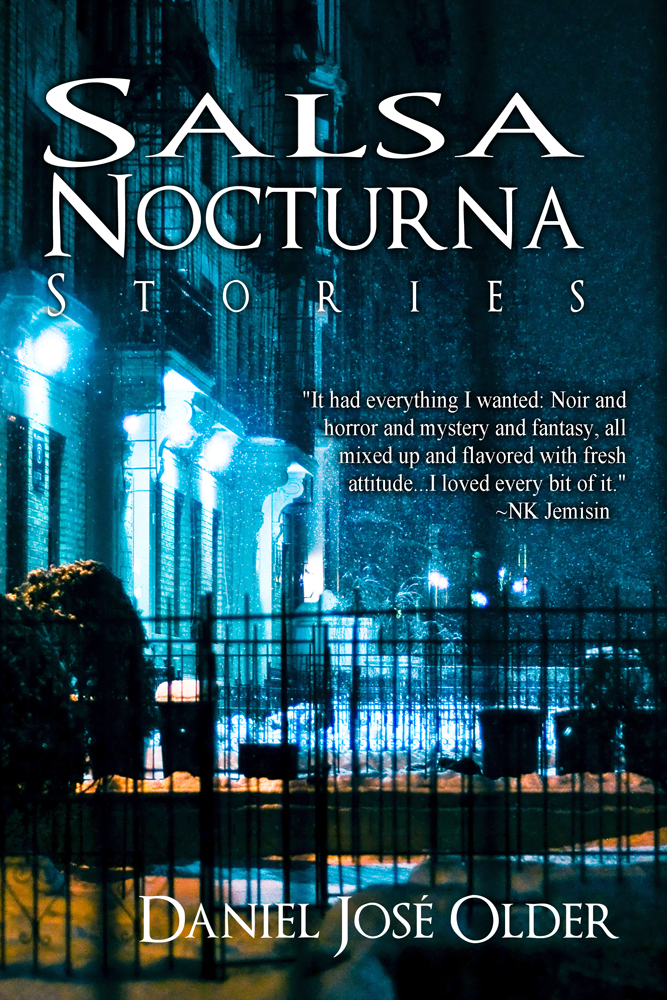
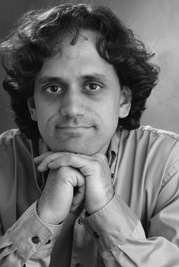
Daniel José Older is the author of Salsa Nocturna, a collection of ghost stories that Publisher’s Weekly called a “delicate mix of horror and humor” that secures Older “a place among the rising stars of the genre.”

Daniel José Older is the author of Salsa Nocturna, a collection of ghost stories. He’s also a composer and paramedic living in Brooklyn, New York. He has facilitated workshops on music and anti-oppression organizing at public schools, religious houses, universities, and prisons all over the east coast. His soul band Ghost Star regularly performs original multimedia theater productions about New York history around the city. His stories have appeared in Strange Horizons, Flash Fiction, Crossed Genres, and The Innsmouth Free Press and The Subversion Anthology, among others. He’s been a featured reader in Sheree Renée Thomas’ Black Pot Mojo Reading Series and at The New York Review Of Science Fiction.

In this interview, Older discusses ghosts and stories and why we love to combine the two.

(To read Older’s story “Victory Music” and an exercise on introducing genre elements into literary fiction, click here.)

Michael Noll

This is a ghost story, and it begins appropriately, with the narrator telling a dead person that “you’ve saved my life at least twice. And once was after you died.” But I was still surprised when the ghost actually arrived, not only because it’s not the ghost we expect but because I’d gotten so engaged in the scene with the narrator’s parents that I’d forgotten that there was supposed to be a ghost at all. I was reminded of Kenneth Burke’s essay, “Psychology and Form.” To explain how suspense is created, he uses the scene from Hamlet when Hamlet is waiting for his father’s ghost but then gets distracted by this uncle’s drunken entourage. Hamlet, and the audience, get so wrapped up in his uncle that we forget all about the ghost and so are surprised when it arrives. I wonder if you had this basic idea in mind when you wrote the story: promise something and then delay its arrival.

Daniel José Older

Great question. I’ve always been fascinated by the letters we write and never send, or write in our heads but never put on paper. I think this is one way we interact with the dead without meaning to or realizing it sometimes, that internal dialogue. The idea of the things we never had a change to say to someone is so heartbreaking and so real. So on the process tip, that was my starting point. In this case, I wasn’t thinking of Krys as a foreshadow so much as an emotional center that Wes anchors to for support even after Krys is dead. Memories are powerful, more powerful than ghosts maybe, and the subtext to this story, in my head, is that Krys—who does show up as a ghost in my book Salsa Nocturna—is never actually present in this story; Wes uses the memory of Krys to access a sense of their own power and sense of self.

Michael Noll

Salsa Nocturna is a collection of 13 ghost stories, published by Crossed Genres Publications.

Salsa Nocturna is a collection of 13 ghost stories, published by Crossed Genres Publications.

Your first book, Salsa Nocturna, is a collection of ghost stories. On one hand, when I read the description of the book, I thought, “Oh, that’d be fun to focus every story on ghosts.” But then I realized that you’d have to make each ghost and the approach to each ghost different. To that end, the ghost in this story isn’t really a ghost. He’s someone who can vanish at will–but, he still seems like a ghost. So, to some extent, it seems like you’re expanding the definition of ghost and ghost story. Is that simply out of necessity–there are only so many ghosts?

Daniel José Older

Ha! I really hadn’t thought of it that way. Once the underworld, or parallel world really, of ghosts became clear in my mind, the stories all came very smoothly. In some sense there’s truth in what you say though, as artists we always need to be pushing at the borders of our genre and comfort zones, and with “Victory Music” I was interested in how we are haunted sometimes more by the living than the dead. It’s a concept I’ve played with before, though never quite in these terms, and as I said, the healing power of memory plays a major role here. Niles just showed up in my imagination as is—he was born from the necessity of having an eerie, emotionally resonant conflict for Wes. And the act of disappearing is so rich, so layered when complicated by power and privilege…it’s a natural fit for the story.

Michael Noll

In this interview at the New York Times, Victor LaValle (The Devil in Silver), says, "The best monsters are our anxieties given form. They make sense on the level of a dream, or a nightmare."

In this interview at The New York Times, Victor LaValle (The Devil in Silver), says, “The best monsters are our anxieties given form. They make sense on the level of a dream, or a nightmare.”

The writer Victor LaValle said in a New York Times interview, “The best monsters are our anxieties given form. They make sense on the level of a dream, or a nightmare.” The ghost in your story seems to fit this description. The narrator is concerned with identity–her Sikh-ness, her gender–and then, appropriately enough, here comes a guy who can empty out his identity until he literally vanishes. Do you think about the meaning of your ghosts, the particular anxieties that are manifested in them?

Daniel José Older

Surely—the ghost is a crossroads. Past and present, life and death, healing and destruction all have the potential of meeting in the figure of the ghost. When we spend so much time focusing on the simple concept of ghost as evil spirit, it’s just a profound missed opportunity. Writing Salsa Nocturna really taught me that ghost stories are really about life, not death.

Michael Noll

I know a horror writer, Scott Johnson, who, in his free time, investigates ghosts and has encountered them many, many times. Those encounters have ranged from terrifying to quirky to sweet. I love hearing his stories—and other true ghost stories. Though I’m not sure I “believe” them in the factual sense, I find them utterly compelling. So, while I’m curious whether you believe in ghosts, I’m more interested in your take on ghost stories: Why do we tell them so often? What is the appeal of ghost stories?

Daniel José Older

How we view ghosts is about our connection to our own histories. Do we have something lurking back there, waiting to pounce? Do we lament an idealized day gone by? Have we found balance or are we still at war with our past? On a national sense, there’s so much undealt with baggage in the founding and maintaining of this frail, corrupt democracy and we’ve never really confronted what that means. So the idea of a shadow from history materializing in our modern world and causing havoc resonates, on a level that touches on both anxiety and empowerment.

December 2013

Profile pic

Michael Noll is the editor of Read to Write Stories.
An Interview with Benjamin Rosenbaum

12 Dec
Benjamin Rosenbaum's story "Feature Development for Social Media" was published at Tor.com. You can find a complete list of his stories here.

Benjamin Rosenbaum’s story “Feature Development for Social Media” was published at Tor.com. You can find a complete list of his stories here.

Benjamin Rosenbaum is the author of The Ant King and Other Stories. His stories have been published in Nature, Harper’s, F&SF, Asimov’s, McSweeney’s, and Strange Horizons, translated into 23 languages, and nominated for Hugo, Nebula, BSFA, Locus, World Fantasy, and Sturgeon Awards. He lives near Basel, Switzerland.

In this interview, Rosenbaum discusses social media in fiction, our ability to grow accustomed to anything (even zombies), the phrase first world problems, and a tabletop roleplaying game about teenage monsters.

(To read Rosenbaum’s story “Feature Development for Social Networking” and an exercise on story tone, click here.)

Michael Noll

I’ve been struck by the absence of social media in new stories and novels. In fact, the only social-media story I can think of is Jennifer Egan’s “Black Box,” which was written as a series of tweets. So, I love the sections of your story that are written as Facebook messages. What were the challenges you faced in using this form? Was it tempting to treat the medium ironically—to exaggerate or spoof the way people communicate via Facebook. Even though the scenario is far-fetched (zombie attack), the way the characters communicate seems authentic and real.

Benjamin Rosenbaum

I feel like there’s a certain amount of use of social media, instant messaging, etc, particularly in YA fiction. M.T. Anderson’s brilliant novel Feed comes to mind (not written exactly in an epistolary style, but in which the equivalent of IM’ing and tweeting is heavily foregrounded and substitutes for much of the dialogue), or Lauren Myracle’s ttyl.

Interestingly, the direction of my revisions was to tone down the realism of the Facebook usage. It’s not so much that I was tempted to exaggerate and spoof, as that my initial draft was very closely emulating real Facebook usage — for instance, the fact that the responses to a comment do not follow the comment immediately, but occur after a certain lag time during which other comments have intervened. In revision I simplified and threw away some of the peculiarities that are part of real Facebook interactions, but which weren’t thematically central and which made it harder to read smoothly as fiction.

I tried to be pretty naturalistic, rather than broad, because I thought the humor would mostly come from the contrast of the realistic, everyday style of discourse and the fantastical situation. I was going to say “familiar style of discourse” and “unfamiliar, dramatic situation”, but of course it’s really two familiarities — the everyday, real-world familiarity of social networking and the pop-culture familiarity of the zombie outbreak.

If anything, in revision, I made the satire sharper and the characters more distinct. Jewell got bubblier and more committed to lower-case abbreviations, Buster more self-serving and insensitive, etc. In that sense it actually became less naturalistic — the characters moved closer to being types, the way Dickens’s or Austen’s minor characters are. There’s always a balance to be struck between naturalistic and stylized.

Michael Noll

The actual zombie action takes place off the page, referenced but never seen directly. Even when the story’s characters see zombies, they don’t describe them with great detail. In a way, this seems to cut across the zombie genre, which almost always shows gore and carnage eventually. For instance, in this exchange between Facebook employees, one of them writes: “Suresh, you should check out the 2nd floor webcam. There’s not a lot of Grief and Loss Counseling going on up there right now. Nor do I recommend a massage.” I love that this detail is delivered as a literal P.S. to an email about the feature development from the story’s title. This particular exchange ends with one character writing, “Let’s not get distracted people!” On one hand, this is funny. On the other hand, it seems like it keeps the zombie-biting-people stuff from taking over the story. Were plot details like this one always dropped into the story so casually? Did they ever occupy a more direct space?

Benjamin Rosenbaum

So partly, I was going for a humorous deflation of the zombie story. If I’m juxtaposing the mundane detail of the everyday with the horrific detail of the apocalypse, and they are described with equal focus, the horrific details are going to take over emotionally.

Blood and gore are sensational: they force the reader to pay attention, demand an emotional reaction. On the other hand, if you demand an emotional reaction when you haven’t really earned one — when the reader isn’t sufficiently invested in the characters and the action — you get sentimentalism or melodrama rather than a real emotional response. The reader pulls back, because you’re rubbing their face into extreme stimuli without having won them over.

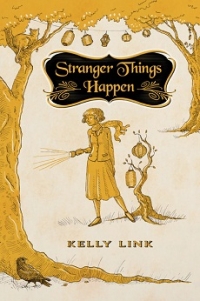
Kelly Link's collection of stories, Stranger Things Happen, includes the brilliant story "The Specialist's Hat."

Kelly Link’s collection of stories, Stranger Things Happen, includes the brilliant story “The Specialist’s Hat.”

So in a way, distancing the carnage is a double win: primarily, it’s funnier, because it allows the juxtaposition of mundane and extreme to be a balanced juxtaposition. But also, I think it may actually be scarier too, because the little details of what’s going on sort of slip in to the narrative. Something that’s just offstage is often scarier than something in the center of the screen. The end of the movie Blair Witch Project is far scarier than most horror movies where there’s an onscreen monster, because so much is implied, evoked in your imagination. However good the CGI or the rubber suit is, it’s never going to be as frightening as what your brain can project into the unknown. Kelly Link is an absolute master of this; I think “The Specialist’s Hat” is an exquisitely scary story, for instance, precisely because of what we don’t know.

In writing this, funny was more important to me than scary, but the little bit of scary helps bring the funny into relief, and makes it sharper.

There’s another related thing going on here, too, which is that I wanted to talk about habituation, which I think of as one of the most powerful mechanisms of the human mind. It’s like we can get used to anything. Like, in the first decades of aviation, flying was this incredible, awesome, unbelievably thrilling achievement. Human beings could fly — like birds! We had conquered gravity! To ascend to the heavens in a plane was mindblowing, it was this rush of absolute wonder and power. Now we get on a plane and we’re like, security sucks, my seat is uncomfortable, why do I have to put my tray table up, damnit my laptop battery is down and the inflight magazine is boring, what do they expect me to do, spend my time looking out at the clouds? This is actually hilarious when you think about it. And at the same time, people in horrific situations habituate to them too. I just re-read the Diary of Anne Frank, the new edition where they restored a bunch of stuff that had been cut out for propriety’s sake in the 50s. Anne Frank spends very little time on the Nazis. She occasionally remarks that it sucks that they have to hide, and that she’s worried about her schoolmates who didn’t hide in time, and that they’re following the progress of the war. But 90% of the time she’s pissed off at her mother, and at Peter’s mother, and at the guy she has to share a room with. Somebody’s not peeling enough potatoes and someone else is hogging the radio. That’s what life is composed of, whether you are an internet billionaire or a hidden Jew in occupied Holland during the Holocaust. Occasionally you stick your head up and think “hey, I could buy a small country!” or “hey, I’m probably going to be killed soon!” but most of the time you’re like “goddamnit, these potatoes are too salty” or “omg I think he might like me like me.”

That’s what’s deeply wrong, by the way, with this whole #firstworldproblems meme, you know that one? It’s supposedly an excercise in humility and perspective, but in fact it’s an exercise in arrogance. You know, like “my underwear is itchy #firstworldproblems” or “there’s too much goat cheese in my salad #firstworldproblems” or “I can’t get my favorite show on my cell phone #firstworldproblems”. You think people in Bangladesh don’t complain if their underwear is itchy? You think people in the dystopian industrial sprawl of China don’t bitch about their cell phones? There are 1.2 billion cell phones in China, four times as many as there are in the US, 89 per 100 citizens (in the US it’s 103 per 100 citizens). I just read the graphic novel of Waltz with Bashir — there’s this scene where there’s a firefight on the beach in Beruit, and the locals are coming out onto the balconies of their highrise beachside condo apartments to watch the gunfight like it’s a movie, leaning on their railings, smoking and kibitzing. Humans can get used to anything. Our focus is local. I grew up during the crack and AIDS epidemics, with most experts telling us that global nuclear annihilation was immanent, and I knew all that, but still I was mainly interested in playing D&D and going to 7-11, right? So it seems very clear to me that if there’s a zombie apocalypse, a lot of people are going to feel like that’s security’s job to deal with, and they need to get the next feature out. I mean we are currently dealing with the longest-running war in U.S. history, the irreversible melting of the polar ice caps, antibiotic resistant tuberculosis, and looming government financial default, but we’re still mainly interested in watching videos of cats. Why would zombies change anything?

I went back and looked at an early draft of the story — this dynamic, the foregrounded mundane and the offstage carnage, was in it from the beginning. Mostly what changed in revisions were plot and structure things. The story has a better ending now; it just kind of trailed off in earlier drafts.

Michael Noll

Zombie stories and other monster stories, especially vampire stories, are everywhere you look right now–and have been for a few years. They’re scary and thrilling, of course, but I wonder if their appeal runs deeper than just thrills and goosebumps. More than a few people have pointed out that zombies and vampires tend to reflect our fears as a culture (fear of outsiders, certain kinds of sexuality, fear of death). But I wonder, given the present wars and political violence, if monster stories don’t somehow put mass violence at a remove–in other words, putting our fear of such violence into a form that we can consume without being overwhelmed with fear or terror or grief. What do you think? What’s the power or appeal of zombies?

Benjamin Rosenbaum

I think this is a very good insight. It’s certainly one main job of the fantastic, in general, to put things at a remove where we can deal with them. When we think directly about dangers that really exist, we can get caught up in despair or anxiety, and sink. Adding an element of the impossible is one way of freeing up our minds, so that we relate to the danger with playful creativity. Often, this kind of distancing can make the emotional impact of a story greater. We’re less likely to get overwhelmed and shut down if there’s a balance between the absurd or imaginative and the horrific.

There are other techniques that can do this in realistic narratives. I recently read Ishmael Beah’s A Long Way Gone, his memoir of being a child soldier in Sierra Leone. What happened in his life was, he had this relatively idyllic, calm, rural childhood, and then the war came and first he was fleeing and starving as a refugee, and then he was brutalized and drugged and forced to murder people, and then he got out and was rehabilitated. If he told it in strict chronological order, it would start out pleasant and slow, and then descend into just unbearable awfulness, and then level out into a long and difficult and slow, if hopeful, recovery. That would be really hard for the reader to take. When you got to the part with twelve-year olds killing and mutilating people, you wouldn’t be able to go on without checking out emotionally. So what he does is very sophisticated and wise. He starts out chronologically, but as it gets worse — in the part where they are wandering around starving and being chased away from villages and seeing people die — he salts it with flashbacks. You’ll be in some truly horrific scene and he’ll say “oh, and this reminds me of the story my uncle used to tell back in the village” and he’ll give you something whimsical or sweet. And it’s not cheap or gimmicky, because he’s not just doing it to protect you from being overwhelmed. He’s also honoring the village that was lost, he’s sharing with you the whole reality of where he came from, which is not just the horror of the civil war but also the humane, pleasant ordinariness of the lives it intruded into. He’s showing you that Sierra Leone is not just child soldiers killing people, but also uncles telling stories at dinner. And when he gets to the worst part — where he actually becomes a soldier — he gives us very little of it, before skipping ahead to the story of rehabilitation, and then gradually feeds us the horror in small flashbacks, interleaved with things getting better. The treatment of chronology is very deft. He’s protecting the reader, not in order to insulate the reader from what happened so that the reader doesn’t care, but rather so that the reader will care — so that we won’t get overwhelmed and start reading it as just a story of terrible people in some terrible place. He’s resisting being sensationalized, resisting the role of the victim, insisting on constantly putting forward his own and his people’s humanity and agency and ordinariness.

So that’s one thing. Fantastic elements can serve the same kind of purpose, of distancing us enough so we can connect.

Mass violence is one thing zombies can stand for. Pandemics are another — this is definitely a zombie story in the spirit of 28 Days Later, where it’s a grittily real medical catastrophe that’s going on. A related thing that interests me about zombies is that they’re about dehumanization. Someone is infected with something that makes them dangerous and violent — do you see them as a monster, or as a person with an illness? There’s a way in which the apocalypse is often used to grant the characters, and the readers, license to escape a world in which we’re expected to deal responsibly with other people, to tolerate difference, to resolve conflicting needs; if everything falls apart enough, we have permission to just chop off the heads of people who we find difficult. Zombie stories are also about isolation. When I moved to Switzerland the most recent time, and was feeling very disconnected, I found myself having obsessive daydreams about pandemic flu clearing the streets, about having to subsist on what was in my apartment, to bar my door.

Monsterhearts is a roleplaying game where players explore the confusion that comes both from growing up and feeling like a monster.

Monsterhearts is a roleplaying game where players explore the confusion that comes both from growing up and feeling like a monster.

Monsters can stand for a lot of things. There’s a really brilliant tabletop roleplaying game, probably the best-designed roleplaying game I’ve ever played, called Monsterhearts, about the messy lives of teenaged monsters. One thing that’s amazing about it is how the game explicitly instructs you to create fiction that operates on both literal and metaphorical levels, simultaneously. Your Werewolf feels out of control of his body, which is changing without his consent — like every teenager’s, but also like a werewolf. Your Ghost feels invisible and lost, trapped by the past and like no one can even see, much less understand her, plus she actually can walk through walls. Your Vampire is about temptation and emotional manipulation and dangerous desire and also bites people. The game captures the balance that fantastic fiction strikes at it best — the fantastic elements evoke emotionally real things without being reducible to them. It’s not allegory, it’s symbol, which means it doesn’t collapse into a hidden meaning like a code, rather it radiates out meanings, generating echoes of echoes.

December 2013

Profile pic

Michael Noll is the editor of Read to Write Stories.
An Interview with Myfanwy Collins

5 Dec
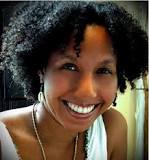
Myfanwy Collins work has been called "stark and stirring." Her forthcoming novel, The Book of Laney, will be released next year.

Myfanwy Collins work has been called “stark and stirring.” Her forthcoming novel, The Book of Laney, will be released next year.

Myfanwy Collins is the author of the novel Echolocation, the story collection I Am Holding Your Hand, and a very long list of stories, several of which have been nominated for the Pushcart Prize or Best of the Web awards. Next year, she will publish The Book of Laney, a Young Adult novel.

In this interview, Collins discusses the impetus behind first drafts, the difference between writing fiction for adults and for young adults, and palate cleansers for novelists.

(To read Collins’ story “Poinsettias” and an exercise on story endings, click here.)

Michael Noll

I’m curious about your process for writing this story. The story contains the term non sequitur, which seems to be the way the entire story operates. The jump from fresh breath to poinsettias isn’t logical. And while poinsettias and the rotting turkey are both Christmas-related, the introduction of the turkey still confounds our expectations (she goes to the store not to buy a turkey but to return a rotten one). The same thing happens with the jump from rotten turkey to dead mother. There’s clearly a connection, but it’s a sideways jump rather than a jump forward. I can’t imagine writing something like this with any sense of destination (of knowing how to get from peppermints to dead mother). How did this story take shape?

Myfanwy Collins

Great question. Your response to the story has really got me thinking. As with most short fiction I write, I wrote it as it came to me. The connections are as they came to me. The jumps, in my mind, have logic to them, but not everyone is in my mind and so I love that you have found this sense in them. I could not ask for more.

The impetus for the story were a couple of things on my mind the day I wrote the first draft.

The mundane things:

  • I have an altoids obsession and the tins are everywhere and I think this must really annoy my husband.
  • My husband insists on keeping poinsettias alive after the holiday. This drives me bananas.

The not so mundane things:

  • A few days before Christmas one year, there was a horrible smell in my fridge. We threw out everything we thought it might be. It still stank! Then I started googling the smell and realized it was the goddamned turkey that I was supposed to be cooking in a few days. I returned it to the store and they gave me a new one. They told me they would dispose of the old one for me. For some reason, this made me deeply sad. This bird had given its life for nothing.
  • The deep sadness I felt, made me think of my mother. Her last breath. The way we sent her off to the funeral home with her fuzzy blanket.

And now I’m crying.

Michael Noll

The ending reminded me of the ending to Alice Munro’s story “Friend of My Youth,” when she jumps, without any immediate logic, to a story about a Cameronian minister, who “in a mood of firm rejoicing at his own hanging, excommunicated all the other preachers in the world.” Even as I type those words, I get chills. There’s something thrilling about an ending that seems to come out of nowhere, as the ending to “Poinsettias” does. Was there a story that you had in mind as you wrote this? Or, if not, what’s your favorite non sequitur/out-of-nowhere ending?

Myfanwy Collins

Oh, this is so cool. I love it. Thank you.

No, there was no story I had in mind. I write from my own gut and experience. I write from the source of my pain or emotion. I write to release myself from something.

Michael Noll

Your forthcoming novel The Book of Laney is a young adult novel. On the surface, this is a bit startling given that your previous book, the story collection I Am Holding Your Hand, included a story that, according to the jacket description, is about “a woman has sex with her dead mother’s husband,” not exactly YA content. What made you want to write for a YA audience? What effect did this have on your approach to the novel?

Myfanwy Collins

Myfanwy Collins first YA novel, The Book of Laney, will be published by X in 2014.

Myfanwy Collins’ first YA novel, The Book of Laney, will be published by Lacewing Books in 2014.

The books of my youth (many of them written for young adults, but some were adult books) remain some of my favorite books. I think of authors like Judy Blume and Paul Zindel. They helped shape me. As did Salinger (I read the Catcher in the Rye when I was 12).

Then there are authors like Carson McCullers who write books that both young adults and adults are moved by. For example, The Member of the Wedding. In that book, McCullers was able to capture a sense of longing that is so pure and ferocious that one falls so easily into the longing with her.

When I was an undergraduate, I had a double major in Secondary Education/English and English Literature/Writing. For a very brief period of time before I started graduate school, I taught High School English. I did so because I enjoyed the age-group very much. Their insights, their emotions. I listened to them.

All this is to say, I have always felt a kinship to this age group. Often, I’ve written from the point-of-view of a young child or a young woman, so in terms of POV, it was not foreign to me.

As for my approach, I would say that the first drafts suffered the most from me trying to fit into some model I thought Young Adult books would be (even though I knew it wasn’t true). I was trying to reign myself in and not allow my character to be sexual or too adult or this or that. I thought I had to follow some rule about toning things down. Then after some time away, I realized that I was not being true to my writing self and the story was suffering as a result.

Then I had a wonderful editor (Andrew Scott at Lacewing Books) request to read the manuscript. I warned him that I wasn’t fully happy with it and that I wanted to make changes, but he bit the bullet and read it anyway.

Turns out he liked it and saw potential in it. He gave me some notes and I got back to work. But before I did, I ask him if there was anything I shouldn’t write in a YA book. He told me that pretty much everything was on the table except for bestiality and necrophilia.

I am extremely proud of the draft I turned in to him in October. I know there is still work to be done, but I feel the story is stronger for me unleashing myself a bit. I love my character Laney and I was honored to go on her journey with her. I hope the readers will feel the same way.

Michael Noll

Your list of publishing credits is astoundingly long, especially for someone who writes novels. Do you tend to work on multiple pieces at once? I’ve heard people say that novels are like black holes–they swallow up everything else that you’re working on. Everything gets incorporated into the novel. But that doesn’t seem to be the case with you. Do you take breaks from novel writing to work on shorter pieces?

Myfanwy Collins

In all things, there is nothing better than a good palate cleanser. So, yes, I do write lots of other stuff. I’ve even written some screenplays. They both suck but it was an incredibly good lesson in writing dialogue and action. I recommend it.

I love flash fiction and short stories, as a reader and a writer. I feel like short fiction takes up a different part of my brain than does a longer form, like a novel. With short fiction, I feel less attached to plot and more attached to an emotional response. Whereas with a novel, I absolutely insist that I give plot the respect it deserves.

I just (yesterday as a matter of fact) finished the first draft I’ve been working on for the past couple of years. I didn’t have time to focus on it until recently and it feels like such a relief to have the clay now that I can mold.

But now that I have that draft, I’m going to let it sit for a little while and write some shorter fiction. Most likely, I will go back to a project I’ve been posting on my web site. I call it vellum.

Basically, what I’ve been doing is writing these small pieces and posting them. If anyone reads them, great. If not, that’s okay, too. the reason I started doing it was to rediscover the joy of writing. Writing for no reason other than to hope a reader finds it and sees in it what I do.

December 2013

Profile pic

Michael Noll is the editor of Read to Write Stories.

How to Write Plot by Answering the “Why” Question

5 Nov
Tiphanie Yanique's story "How to Escape from a Leper Colony" was first published at Boston Review.

Tiphanie Yanique was born in St. Thomas in the Virgin Islands and lives in Brooklyn. She was the 2010 recipient of the prestigious Rona Jaffe Prize in Fiction.

When we talk about plot, the focus is often on what happens–setting it up, teasing the reader with what will happen next, creating suspense. Sometimes, though, plot is built upon the question of why things happen.

Tiphanie Yanique’s story “How to Escape from a Leper Colony” perfectly demonstrates how to build plot by answering the why question. The story was first published at Boston Review, where it won the journal’s annual short story contest. It was eventually included in Tiphanie Yanique’s story collection, How to Escape from a Leper Colony (Graywolf Press). It’s as good a story as you’ll ever read. You can find it here at Boston Review.

How the Story Works

The title of the story—”How to Escape from a Leper Colony”—makes clear what will happen in the story:  someone, almost certainly the narrator, will try to escape the island. The question is why. The answer, of course, will be some version of Because they must or Because they have no choice. But that is not enough. The driving impulse to escape must be more than a plot mechanism. It must originate from the characters’ sense of themselves and their world—even if the cause is due to external events.

Here is how Yanique introduces the characters’ attitudes toward what will eventually happen:

“What evil thing Lazaro will do later we will forgive him for, because we know his past and because we know he is one of us.”

That sentence sets up two important ideas:

  1. Something has happened in Lazaro’s past that shapes his sense of the present
  2. He (and the narrator and others) are part of a group—which suggests that there is another group with different ideas about what will happen.

So, what is the belief system or attitude of Lazaro’s group? Much of the story is spent developing the particular way the group members view the world, and in this passage, that attitude comes into sharp focus:

“From my mother I learned that Christians love leprosy. Christians are not so passionate about polio or cholera. But Jesus had touched lepers. Jesus cured lepers. Leprosy gives the pious a chance to be Christ-like. Only lepers hate leprosy. Who wants to be the one in the Bible always getting cured? We want to be the heroes, too. We want to be like Jesus. Or like Shiva. Or like whomever you pray to.”

Because the story so clearly establishes the characters and their attitudes, the events of the story become not simply things that happen but the so-called straw that breaks the camel’s back. In other words, the plot is driven by the characters’ reactions to what happens.

The Writing Exercise

Let’s discover the attitudes of our character(s) using “How to Escape from a Leper Colony” as a model.

  1. Identity the source of the character’s trouble. In high school, many of us learned about literary conflicts: man vs. man, man vs nature, man vs self, man vs. society. While these aren’t particular useful outside of a classroom, they can point us in the right direction. Who or what is your character at odds with?
  2. Identity when the trouble began. You might create a timeline. At the least, you should know if the conflict is old or relatively new. All conflicts warp (or, to put it more positively, conflicts shape) a character’s sense of him/herself in the world. The older the conflict, the stronger the resentment or attitude is likely to be.
  3. Identify the character’s group. All people tend to classify themselves into groups, and those groups often take “an us vs. them” philosophy. The groups can be based on large ideas like class, ethnicity, gender, sexuality, or politics, or they can be based on behaviors. Try defining the group with a phrase such as “The kind of people who…” or “The kind of person who…” For example, there are the kind of the people who love Neil Diamond and those who do not. There are the kind of people who are kind to everyone and those who are not—the kind of people who like to try new food and those who do not.
  4. Introduce the conflict and let the character comment on it both as a member of the group and as someone with a history with the conflict. Think of the story’s conflict as being like herpes. The root problem–the virus–never goes away, and so the conflict occurs when the symptoms reappear. In many stories and novels, the characters’ problem is chronic, a reoccurrence or new manifestation of something he/she has been dealing with for a long time. Try reintroducing the problem–a new occurrence or manifestation of it–and let the character talk about it as someone experienced with dealing with it. Then, let the character view the conflict through the prism of the group beliefs. If it’s herpes, and the group is defined by people who complain and those who do not complain, you might write this: “There wasn’t any point in whining or moaning about it. You just had to get on with things, and people who couldn’t do that–well, he wasn’t going to hang out with those kind of people.”

Play around with these different steps. Try commenting on the conflict in a variety of ways. Once you find a comment that resonates with your character, you may find that the plot (and the way forward into the story) becomes clearer.

Good luck and have fun.

An Interview with the Editors of American Short Fiction

12 Oct
The latest issue of the Austin-based journal American Short Fiction features a story by Roxane Gay and a Pushcart Prize winner "Teen X" by X. ASF also publishes work online, such as this story by Anthony Abboreno.

The last issue of the Austin-based journal American Short Fiction featured a story by Roxane Gay and the Pushcart Prize winning “Teen Culture” by Elizabeth Ellen. The next issue will feature Joyce Carol Oates and Kevin Wilson. ASF also publishes work online, such as this story by Anthony Abboreno.

American Short Fiction was founded in Austin, TX, in 1991 by Laura Furman (editor of the O’Henry Prize Story Collections) and has published stories that have found their way into most of the big, yearly story collections. Like most literary journals, American Short Fiction gone through multiple incarnations. After a brief hiatus in 2012, ASF is publishing once again. The forthcoming issue features work from Kevin Wilson, Joyce Carol Oates, Kellie Wells, and others, including Barrett Swanson. The journal also publishes web-inclusive stories and essays at americanshortfiction.org. One of those stories, “Filler” by Anthony Abboreno, was featured this week here at Read to Write Stories.

In this interview, American Short Fiction co-editors Adeena Reitberger and Rebecca Markovits discuss the editing process, the limits of readers’ attention span for online fiction, and the advantages of publishing online content as well as a traditional print journal.

(To read Anthony Abboreno’s story “Filler” and an exercise based on the story’s character development, click here.)

Michael Noll

The funny thing about reading published stories is that you can’t imagine them existing in any other version. At least, that’s how I feel about Anthony Abboreno’s story “Filler.” And yet I know from experience that most stories that are accepted by journals are usually revised before being published. As a result, I’m curious about your role as an editor for this story. How close to the published version was the first draft that you read? What sort of suggestions did you make?

ASF

A huge part—in some ways the most important part—of an editor’s job is simply being selective. And “Filler” was definitely a case where this was the most important part of our job—choosing to publish the story in the first place. Filler came in already as very clean copy, which is lovely for an editor. I seem to remember we made a couple of tiny changes for clarity, added or removed a comma here and there for technical, grammatical reasons, maybe turned one sentence into two, or two sentences into one, but nothing which would have made you respond any differently to the story than the final version you read on our website. That’s not always the case, and sometimes we do make some significant changes to stories that come our way (especially, sometimes, stories we really love), but we try to trust the authors’ instincts as much as possible, and if we have too big an issue with something, simply choose not to publish the story, rather than trying to “fix” something that may in fact just be a question of taste preferences. We fell for “Filler” right away, though.

Michael Noll

American Short Fiction is a traditional print journal, but it also publishes stories online. Do you think there’s any difference in the way readers approach stories in print versus online? It would seem that someone who picks up the print journal has made a firmer commitment to the work than someone who happens across your website. Does that mean that an online story must have a catchier or somehow sharper-edged first paragraph?

ASF

That’s a great question. And as more and more print journals (both fiction and non-fiction) are being driven, by economic realities, to online-only existences, one wonders to what extent that’s changing the nature of our reading content. The easiest answer to your question is that our policy is fairly simple: we limit our online fiction to stories that are roughly 2000wds or fewer. Now, we might well publish a story that’s 2000wds in our print journal, but you won’t see us publishing a story that is 7000wds long online. I don’t know if it is so much a question of attention span, but it is simply physically a little unpleasant to focus on the same backlit computer screen for that long. And, as you say, relief is such an easy click away. But there are probably more complicated answers to your question, as well. The fact that our online fiction changes every month somehow gives us a little more freedom to experiment in that space than we perhaps feel we have in the tri-annual print edition. And of course the online space has dynamic potential that print lacks: our current online fiction exclusive, for example, was written as a companion piece to a track on an album, and we were able to embed the SoundCloud of the music file right there next to the story, which was great. We love how the online space gives us the opportunity to have fun like that.

Michael Noll

I’m curious about how a journal’s identity and mission are shaped by its online presence. In the past, a print journal needed to offer content only a few times a year. But being online requires you to offer new material on the website with enough frequency to keep people returning to it. Does this new publishing schedule change the way that you approach submissions or editing? You’ve run a literary NFL preview (which was great, by the way), and this is probably something that wouldn’t happen in a strictly print journal. On one hand, some people might say this is watering down the “literary” content of the magazine, but on the other hand, a feature like that one broadens our sense of what it means to be a writer (we don’t often think of writers as die-hard NFL fans). It also gave you the chance to publish a lot of writers all at once.

ASF

I’m so glad you enjoyed that NFL preview—it was a lot of fun, all credit to our fantastic managing editor Jess Stoner, whose brainchild that was. Jess actually offers me a good way into answering your “pretty big question.” She’s a great aficionado of Internet culture (do I sound geriatric enough yet?) and has what I think is one of the most important qualities in an editor: an always-open mind. That means that she’s full of ideas about how to use the web to expand the often too-narrow idea of what a literary journal can do, which can result in fantastic surprises like that NFL series. In our case, I think it would be accurate to say that our website and our print journal have pretty separate identities. For one thing, other than the monthly fiction web exclusive, the website features entirely non-fiction, where as the print journal is fiction-only. That makes it pretty easy to separate out the two without feeling anxious about image questions. To a certain extent, the audience for the website is also probably a little different than the audience for the print journal. The website offers us a chance to join in the conversation about wider cultural issues that aren’t necessarily fiction-related (we have a regular series called “Things American” that gives us a great outlet for that sort of thing). But most of all, we like to use the website as a compliment to the journal, so that if we publish an author in the journal, or have published someone in the past who, say, has a new collection coming out, we feature an interview with her on the site. Or we can use the site to add a fresh dimension to the content in the journal, in the way I discussed above, by having, for example, playlists or visual material that might compliment a story in print. Ideally, a reader of both the print and online versions of American Short Fiction will find the two experiences not redundant, but also not add odds; companionable; two sides of one coin.

Michael Noll

American Short Fiction is located in Austin, which has always had a strong literary community. But it also seems to be a community that is growing and developing a stronger national reputation. What does it mean to be an Austin literary journal?

ASF

We LOVE being an Austin literary journal! As you say, the writing scene here is lively and growing quickly, with new publications and independent bookstores springing up all the time, and it’s great to be a part of that. We’re also excited about getting involved with the artistic community in general, so, for example, we try to feature art by local artists on our covers, and local musical acts at our events, etc. Literary hubs like New York obviously present their own advantages, but it’s nice, as a national journal, to swim around in a smaller pond too, sometimes, especially as the other fish are so colorful, and we like the relaxed atmosphere down here in Austin. It just feels nice and neighborly, and it’s great to have a local community that’s really invested in what you do. Plus, the tacos are just better!

October 2013

Profile pic

Michael Noll is the editor of Read to Write Stories.