Archive | Writers on Writing RSS feed for this section

An Interview with Octavio Solis

8 Dec
Octavio Solis is one of the most prominent Latino playwrights in the country. In addition to his work for the stage, he's writing a series of stories set in El Paso.

Octavio Solis is one of the most prominent Latino playwrights in the country. In addition to his work for the stage, he’s writing a series of stories set in El Paso, two of which appear in the most recent issue of Huizache.

Octavio Solis is a playwright and director whose works have been produced across the country and include Alicia’s MiracleSe Llama CristinaJohn Steinbeck’s The Pastures of Heaven, Ghosts of the RiverQuixoteLydia, June in a Box, Lethe, Marfa Lights, GibraltarThe Ballad of Pancho and Lucy, The 7 Visions of Encarnación, Bethlehem, Dreamlandia, El OtroMan of the FleshProspectEl Paso BlueSantos & Santos, and La Posada Mágica. His collaborative works include Cloudlands, with Music by Adam Gwon, Burning Dreams, cowritten with Julie Hebert and Gina Leishman and Shiner, written with Erik Ehn. Solis has received an NEA 1995-97 Playwriting Fellowship, the Roger L. Stevens award from the Kennedy Center, the Will Glickman Playwright Award, a production grant from the Kennedy Center Fund for New American Plays, the 1998 TCG/NEA Theatre Artists in Residence Grant, the 1998 McKnight Fellowship grant from the Playwrights Center in Minneapolis, and the National Latino Playwriting Award for 2003. He is the recipient of the 2000-2001 National Theatre Artists Residency Grant from TCG and the Pew Charitable Trust, the United States Artists Fellowship for 2011 and the 2104 Pen Center USA Award for Drama. Solis is a Thornton Wilder Fellow for the MacDowell Colony, New Dramatists alum and member of the Dramatists Guild. His new anthology, “The River Plays” has been published by NoPassPort Publishing. He is working on commissions for the Magic Theatre SF and Yale Repertory Theatre.

To read an exercise on creating tension between desire and thought, inspired by Solis’ story “The Want,” click here. More of Solis’ stories in this series can be found in the new issue of Zyzzyva and forthcoming in Arroyo Literary Review. On March 4, Solis will read from these stories at Arts & Letters Live at the Dallas Museum of Art.

In this interview, Solis discusses his approach to fiction and nonfiction, laying the mental groundwork for stories, and moments that lead characters to speak in code.

Michael Noll

Huizache doesn’t label this story as fiction or nonfiction, and so I’m wondering how you would categorize it. Is it one or the other?

Octavio Solis

I would categorize it somewhere between. I started writing these pieces that reflect things that happened in El Paso: turning points in how I recognized how I functioned in the world and who I am, so they’re moments of discovery. But as I was writing, some of them seemed so surreal that they seemed like dreams, and so if I didn’t write them down, they’d be relegated to just dreams. But as I started writing them down—I’m a storyteller, it’s what I do—as I started writing the story, the details and characters started to take on a life of their own. There are details on the sides that aren’t clear, I can’t see them as clearly, and so I give myself permission to make them up. But they’re made up in the sense that I insert them in the moments when they weren’t there, but they’re part of my background, personal history, youth, my past. So they fall into place very readily. I don’t even feel like I’m making them up. But usually the central moments are real and true except that they take on a life of their own. Somebody said, I can’t remember who, “Once you start writing something down, it starts to become fiction. It just can’t help it.” That’s what I gave myself permission to do: tell a story. I realized I had bigger fish to fry than just write an autobiographical story. I’m more interested in telling stories that will resonate in a more universal way.

As for what really happened, I remember that it happened in the winter, but I don’t remember if it was right around Christmas time. It could have been. I remember that I was in college, so it had to have been over Christmas break. But to write that way, frankly about something like that, I’m running a risk because it doesn’t cast me in such a positive light. At the very least, I look like an idiot. But I was young and stupid and horny and crazy—and something else was operating. I also had recently lost my faith. I was told I’d been saved by my drama teacher, was reborn in Jesus and all that, and warned not to stray in college. Then all of that fell away, and I realized the reason I wanted to be saved and be a Christian was to be in the theater. And that felt like it was my way in. But then in college, that all fell away. There were consequences for all that—feelings of grief and remorse about the loss of that community. So I was dealing with loneliness on an epic, metaphysical scale. Not just physical loneliness. And once you have all of those ingredients working together, you become sensitive, aware of the invisible connections that were already emerging. You just let them happen. You don’t even have to force them that much. And so suddenly this girl becomes the virgin Mary and I’m offering her refuge. Of course it’s a complete negative image of that. She’s not looking refuge. I’m looking for a good time and she’s ready to provide it, which is quite different, and that’s the point. It’s an inversion of the Christ story.

Michael Noll

Did you always know the story was headed for that moment? The beginning is filled with Christmas imagery—Bing Crosby, the lodestar in the Franklin Mountains—but there’s also a shock of recognition at the end for the narrator (“And how fucking Catholic of me…What a fucking cliché.”)

Octavio Solis

It also happened to me as a writer, that sort of discovery, oh shit, what have I been writing? It’s all so clear to me now. How could I have missed it? That’s the wonderful thing about writing these stories. I’ve amassed 50 of them.The wonderful thing about them is that I make discoveries as a writer as I’m working on them. I’m not there to share an epiphany. I’m having the epiphany. That final paragraph is also me as a writer thinking, “Oh Jesus, unbelievable.” No matter how much of an atheist I am, all this Catholicism has made me think this way—and I’m so blind to it. I’m hoping that if I’m having the discovery, the reader will land in this same place. And that comes from my theater background. I was trained by a great writer, María Irene Fornés. She taught us to be available to the moment, to discoveries, to not have everything so planned out, to see the journey, the starting point clearly and follow the thread. It will take you to a place as a writer you didn’t expect. Then it becomes a delightful discovery for the writer and will be that for the audience. If you can predict how it’s going to end, the audience will, too. But if you don’t now what’s around the corner, then the audience won’t, either.

Michael Noll

There’s something pretty uncomfortable about that discovery, especially in the moment right after he picks up the girl. He claims to be doing it out of concern for her, but when he says, “Dangerous for a girl in her condition…I hope you didn’t drink too much,” it’s creepy. As I read it, I thought, “Oh no.”

Octavio Solis

Oh yeah, it’s very uncomfortable. But then it turns around the other way as well: she looks innocent and stranded, but she’s not. She’s also looking for me as much as I’m looking for her. The dynamics are constantly shifting inside the car. They start shifting from the time I see her. The dialogue in the car—because of the discomfort, because it’s harder to just lay out baldly what the needs and wants are—you start speaking in a kind of code, unconsciously, without the narrator really knowing what he’s really after, what he’s really saying, until she makes it very clear: You wanted this. You were after this. Don’t pretend otherwise. Because he’s functioning on two planes. I explain a little in that passage about the difference between want and need: I want someone in the carnal way, I need company, I need to be good again, the good Christian again and find myself in fellowship with other people just to do that. He’s opening on this level where he’s wanting someone. He even says, I want someone to give me some nighttime CPR, and goes into bars looking for that. He wants to take her home. He’s a boy scout, but he also won’t admit to himself that he wants something else.

December 2016

Michael Noll Michael Noll is the Editor of Read to Write Stories.

An Interview with Angela Palm

1 Dec
Angela Palm won the Graywolf Press Nonfiction Prize for her memoir Riverine.

Angela Palm won the Graywolf Press Nonfiction Prize for her memoir Riverine: A Memoir from Anywhere but Here.

Angela Palm is the author of Riverine: A Memoir from Anywhere but Here, recipient of the 2014 Graywolf Press Nonfiction Prize. She is the editor of a book featuring work by Vermont writers, called Please Do Not Remove. She has taught creative writing at Champlain College, New England Young Writers’ Conference, The Writers’ Barn, and The Renegade Writers’ Collective and is the recipient of a Bread Loaf Fellowship in nonfiction. Her writing has appeared in or is forthcoming in Creative NonfictionEcotoneAt Length MagazineBrevity, DIAGRAM, Essay DailyPaper Dartsapt, SmokeLong Quarterly, Hippocampus MagazineMidwestern Gothic, Little Fiction, Big Truths, and Sundog Lit. She was raised in the rural Midwest and lives in Vermont.

To read an excerpt from Riverine and an exercise on writing expansively, click here.

In this interview, Palm discusses finding the thread in connected essays, moving beyond the self in memoir, and what it means to be a Midwestern writer.

Michael Noll

Early in Riverine, you write about visiting your riverside home years after leaving it:

“The road had  anew name, the one-way arrow of time expanding here as it was anywhere else on Earth, but the defining entropy of the place was the same. There was no aftermath through which I could proceed as story, as I’d hoped for—no obvious tale waiting to be told.”

This passage encapsulates what I think a lot of people feel as they begin to write their own stories, whether it’s through essay or memoir. What was the moment that happened—in a draft or in your head—that showed you the way into the story?

Angela Palm

I had written four standalone essays in which the landscape of my home featured prominently as metaphor and as setting. I knew the river would be one of the main threads that stitched the different pieces together. I also knew that Corey’s crime was the central narrative hook. But I needed more. Those pieces alone didn’t make a book, didn’t organize a book, so I began doing some research and found different maps of the Kankakee Marsh from different time periods. Mapping—my obsession with its accuracies and inaccuracies, with its erasure, history, and inherent limitations—became the book’s organizing principle. I would use mapping as a way to chart story, I decided, and everything began to take shape from there. It was then that I wrote the opening essays, “Map of Home,” which begins with the epigraph “Every map is a fiction,” by DJ Waldie. That essay and epigraph are a guide to the whole book.

Michael Noll

In the early scenes with your father and friends playing cards, it’s hard not to think about Mary Karr’s The Liar’s Club. That was a book that inspired a lot of memoirists, but it’s also 21 years old. A lot of great memoirs have been published since. Was that a book that shaped your thinking about memoir? What other memoirs were important to you in terms of craft?

Angela Palm

It’s interesting—everyone assumes my book was informed by Karr’s work. But I didn’t start reading her work until after I’d sold Riverine and in some ways I think that was for the best. I fancy myself an essayist at heart, or a writer of books that can’t commit to a subgenre. But the books most influential in writing Riverine were Boys of My Youth by Jo Ann Beard which informed my voice in some way, Dust Tracks on a Road by Zora Neale Hurston which informed my female psyche, and Bluets by Maggie Nelson which gave me permission to mix narrative with research and science and philosophy and lyricism.

Michael Noll

Angela Palm's memoir "Riverine is a different kind of memoir, one that through a kind of sleight of hand transports readers from the narrative into the world of ideas and back again, with readers scarcely noticing the transitions," according to a Wall Street Journal review.

Angela Palm’s memoir “Riverine is a different kind of memoir, one that through a kind of sleight of hand transports readers from the narrative into the world of ideas and back again, with readers scarcely noticing the transitions,” according to a Wall Street Journal review.

The central relationship in the book is between you and Corey, and so, naturally, there are moments when you write about him outside of the frame of your friendship. For example, at one point you write, “Things had started to go really wrong for Corey when he got in trouble for taking a gun to school and stashing it in his locker.” The passage goes on to explain what happened, ending up in an intimate moment shared by both of you. But I wonder, though, about the authority in that first sentence: “Things had started to go really wrong for Corey when…” Did you worry at all about stepping into a more journalistic space, writing about others, rather than the personal space of memoir/essay?

Angela Palm

Limiting myself to those personal spaces—those memories shared directly with Corey—would have resulted in an overly sympathetic and possibly sentimental rendering of story. And I didn’t want that. In order to tell the whole story, I had to move beyond myself in some places—this place in particular. No, it didn’t worry me. I was committed to tracking his transition from innocent kid to traumatized kid to juvenile delinquent to adult criminal. The event of the gun at school was part of that sequence. I spoke with him to clarify my memories of those events and to pin down the timeline. The phrasing of that paragraph combines information and my perception of that information.

Michael Noll

I’m curious about how the literary geography that you place yourself within. If this book had been set in, say, rural Georgia, the word Southern would almost certainly be used in descriptions of both the book and you, its writer. Of course, it’s set in Indiana. Yet I can’t find the word Midwest used in reviews or descriptions of the book—which seems to suggest something about the Midwest as a literary place. I suppose one could say, truthfully, that it’s large and varied, but so is the South. Do you think of yourself as a Midwestern writer? Does that adjective have any meaning for you?

Angela Palm

In some sense, I do consider myself a Midwestern writer. I’ve also called myself an anti-pastoral writer. My writing sensibilities about place come almost directly from the Midwest’s landscape, its people, its history, and its specific challenges. Despite often being considered unremarkable, I find there’s plenty to say and consider and unpack, still, in the region. The connotations of anything labeled “Midwestern” are typically negative, but I reject that. It’s a place full of contradiction, full of rich identity like anywhere else. There are too many boxes to put writers in and too much time spent doing so. Midwestern writer, anti-pastoral, place-based writer? Memoirist or essayist? Advocacy journalist, true crime writer, or prose lyricist? My work has been called all of these things by different people, and still I write without thinking of how a piece might be construed or constricted by its organizational terminology.

December 2016

Michael Noll Michael Noll is the Editor of Read to Write Stories.

An Interview with Kelly Davio

27 Nov
Kelly Davio is the author of the essay "Strong Is the New Sexy" and the poetry collection,

Kelly Davio is the author of the essay “Strong Is the New Sexy” and the poetry collection, Burn This House.

Kelly Davio is the American Editor of Eyewear Publishing, the Co-Publisher and Poetry Editor for Tahoma Literary Review, and the former Managing Editor for The Los Angeles Review. She writes the column “The Waiting Room” for Change Seven Magazine and regularly contributes to a variety of magazines, reviews, and journals, ranging from Ravishly to Women’s Review of Books. Her debut poetry collection, Burn This House, is now available from Red Hen Press. Her essay, “Strong Is The New Sexy,” was published at The Rumpus.

In this interview, Davio discusses the cultural criteria for womanhood, the corporate interests in empowerment, and the lessons of writing poetry for essay writers.

To read Davio’s essay, “Strong Is The New Sexy,” and an exercise on structure, click here.

Michael Noll

This is such a powerful essay, especially the line, “I was never a curvy woman to begin with, but with each of the more feminine attributes I’ve lost, I’ve become, I am given to understand, less and less of a real woman.” I’m curious how you worked up to this statement. Was it a realization that you’ve had for a while and so part of writing the essay was finding a way to say it? Or did this line only occur to you as you worked on the piece?

Kelly Davio

This idea, that I’m the antithesis of a “real woman,” is something I’ve been circling around for some time, often with amusement and other times with resignation or even bald aggravation. Our culture is strangely invested in telling women what makes them real: having curves, having health, having children, having beauty, having strength, having sexiness. I don’t feel that I meet any of the criteria for being a real woman, so it must stand to reason that I’m an unreal woman. I’ve been writing about this idea in my poetry for a little while, and have developed a character I call The Unreal Woman—she’s part comedic alter-ego and part antihero—whom I use to explore the idea of being left out and left over.

In writing “Strong is the New Sexy,” though, I wanted to take a more straightforward, serious approach to this topic. Cathartic as it is for me to write humorous or wry poems about The Unreal Woman, it was important to me to work up the courage to speak bluntly about body image and disability. I may be hyperaware of how few people write about the disabled body in the literary space, but it’s a topic that feels to me like one of the last literary taboos, and I wanted to, if not break it, at least chip artfully around its corners.

Michael Noll

In the first paragraph, you’re learning to swallow again and watching hang gliders through the window. This contrast between weakness and strength is carried through the entire essay. At one point in the essay, you juxtapose the statements, “Strong is the new sexy” and “grave weakness.” Did you start with this structure or discover it as you put images down on the page?

Kelly Davio

I did begin with the rough structure in mind. I find it amusing that we speak so much about strength as an essential attribute, especially with regard to living with illness, yet the name of the disease I live with–myasthenia gravis–quite literally means “grave weakness.” That seemed like a fruitful contrast to examine.

Beyond that fact, the form almost seemed to give itself to me on a platter with the unlikely scenario of daredevils hang gliding right in view of the hospital complex (I suppose they’re in the right place if anything goes amiss with their sport). I mean, you can’t make this stuff up! Here are these folks who presumably have health enough to spare, dangling themselves on nothing but air currents, and then you have this group of patients shuffling around in our sweatpants. The only things separating our groups were some large windows and a big gap in circumstance. I liked the idea that I could use this contrast between images of health and disability to work up to the view of acceptance that I put forth in the end of the essay.

Michael Noll

The essay is full of short paragraphs that make quick leaps of logic. For instance, you write this about the therapist: “The most important thing, she tells me, is that I don’t quit eating. Sometimes, people just give up, she says. She looks at my chart again, and asks how much weight I’ve lost in the past few months.” The leap from giving up to looking at your chart is striking. I think I actually paused after I read it the first time. The leap happens without any mechanics. You don’t say that she looked at you worriedly or that she advised you to eat more. There are so many ways that this moment could have been expanded, so many other pieces of seemingly pertinent information that could have been added. Such brevity is often difficult for fiction writers, but you’re a poet. What effect do you think your experience with the distillation and density that happens in poems has on your approach to writing an essay?

Kelly Davio

Most of us have probably experienced the phenomenon of trying to get the spirit of an incident on the page, and adding, elaborating, and decorating that incident for fear we haven’t gotten it quite right or communicated it fully. The problem with that impulse to keep renovating the image is that, the more you add, the more you dilute.

Poetry has a wonderful way of teaching the importance of getting the image right rather than piling on additions; when a poem begins to over-explain by even a word or two, the entire piece falls apart. Poetry has taught me to think through everything I put on the page before I put it there, and to approach everything I write slowly and attentively so that I can avoid the impulse to over-elaborate out of fear that the reader won’t grasp my meaning.

I should also note that I think the positions of the body are often more revealing than dialogue tags, and I tend to use body language in lieu of tagging whenever I can. What we say verbally is only a fragment of what we communicate, and when you excise the “he saids” from your writing, you give yourself room enough to suggest many of those subtleties in a small amount of space.

Michael Noll

In her essay, "Strong Is The New Sexy," Kelly Davio argues that shifting the idea image of female beauty from thin to strong still leaves some people feeling like they're not real women.

In her essay, “Strong Is The New Sexy,” Kelly Davio argues that shifting the idea image of female beauty from thin to strong still leaves some people feeling like they’re not real women.

The essay ends with you watching the gliders. Unlike at the beginning of the essay, you write, “I don’t look away. I have to admit that they are beautiful.” This is a pretty interesting statement given the connections you’ve drawn between the gliders and the ideas of strength and “real” women, which means women with curves. We tend to think in terms of empowerment, the belief that whoever you are, however you look, is good and beautiful. This is especially true with women’s health issues. Cancer survivors compete in triathlons. But that’s not really how this essay ends, and it’s certainly not the advice that you’re given by your doctor. In your case, your body attacks strength and effort. How do you reconcile this paradox: we don’t really have a philosophical place for an illness and a “real” body like yours?

Kelly Davio

Empowerment is a tricky business. Culturally, we have been making some tiny strides toward greater body acceptance for women, but it’s usually a corporate money-maker like Dove’s questionable “Real Beauty” campaign that features nothing but visibly able-bodied women who still fit highly conventional standards of attractiveness. We still have supposedly health-focused television shows that revolve around the entire premise that fat people need to be shamed and monitored into losing weight. And yes, we love to see cancer survivors compete in triathlons! But we sure don’t do much for cancer patients when they’re not “raising awareness”; do we cover our coughs on the bus so that the chemo patient doesn’t catch our germs and become seriously ill? No, unless somebody’s looking inspiring, we have little time for her. We like it when the arc of someone else’s story bends toward us. We like people to look like us, act like us. We have a low tolerance for those people and those bodies that don’t reflect us and underwrite our opinions about the world.

But let me tiptoe off my soapbox and get back to the question at hand. Part of what I wanted to say in this essay is that, over time, I’ve realized that body acceptance is a whole lot more than adopting a sassy attitude as though I’m in a Special K commercial—that’s a cheap imitation of actual acceptance. To me, body acceptance is the choice to allow my body to be as it is and others’ bodies to be as they are. It’s not just about my getting over the embarrassment of walking with a cane when I need to be on my feet for a long time, or coming to terms with all the visible side effects of my medications (though those have been big steps for me). It’s also about stopping the train of envy and judgment; body acceptance means refusing to look at someone else and say “I wish I had your…” or “you’d be so pretty if…”. It’s the radical idea that you and I are both good in and of ourselves, and that no one’s goodness diminishes another’s.

That’s what I mean when I say that I admit the hang gliders are beautiful—I’ve come to a place where I no longer feel envious of their beauty or their health. Just as I can live in this body and call it good, I acknowledge and enjoy their goodness, too.

First Published in August 2014

Michael Noll

Michael Noll is the Editor of Read to Write Stories.

An Interview with Esme-Michelle Watkins

17 Nov
image

Esme-Michelle Watkins’ story “Xochimilco” was published in Boston Review.

Esme-Michelle Watkins is an attorney from Los Angeles. Her writing has appeared or is forthcoming in Boston Review, Indiana Review, Word Riot, Requited, Voices de la Luna and elsewhere.  Born to parents of African-American and Sicilian decent, she is the fiction editor of Apogee Journal and BLACKBERRY: A Magazine. She is also the co-literary coordinator of the Mixed Remixed Festival, held annually at the Japanese American National Museum in Los Angeles. Esme-Michelle is a graduate of the University of California, Berkeley and a recipient of fellowships from Callaloo, Kimbilio, and Columbia University.

For a writing exercise about describing objects in a room based on Watkins’ story “Xochimilco,” click here.

In this interview with Michael Noll, Watkins discusses writing from a child’s point of view, ordering a description of place, and finding a setting that can convey the complexity of Los Angeles.

Michael Noll

I’m interested in the 6th paragraph of the story. You describe what is missing from the room, and in those descriptions we learn so much about the mother through the things that once filled the room. How did you approach this paragraph? Did you begin with the idea in place of giving each item a warning from the mother–Stay Away drapes and Go Ahead and Try It chandelier?

Esme-Michelle Watkins

One of the challenges in writing a story featuring a child narrator is remaining true to her without the intrusion or taint of an adult subconscious. This particular paragraph was with me from the first draft and survived every rewrite. It marked the moment that my visualization of the Don’t Touch Room merged with Aura’s, and in so doing, created an organic space from which to begin the retelling of La Viglia in the next section. Craft-wise, I hoped to accomplish a thoughtful rendering of the relationship Ellis and Aura had with their parents while giving voice to their formative sense of loss, home and identity. We take our cues from adults as children, and begin to see ourselves by way of a societal script passed down to us, often by seminal figures like parents. In writing Xochimilco, in making Aura come to life, I wanted to seam these ideas together within the confines of a short story– somewhat of a tall order! The most authentic and maybe the most efficient way to tackle each of those motivations was to speak about them simply, by way of Aura’s interpretation of the script handed down to her by Mammì and Daddy. Toward the end of the piece we see Aura reject this script in its entirety, and in turn, her evaluation of home, self and loss evolve with this rejection. Through Aura’s eyes we also come to understand certain of Mammì and Daddy’s complexities–as well as the dynamics of their relationship–without ceding the narrative over to their adult subconscious.

Michael Noll

One of the nice things about how the story begins is that we learn about Mammì through the kids’ eyes before we actually see her—and between their view of her and what we see, we get a rich picture of a complex character. In drafts of this story, did the character Mammì always make a late appearance? Or did you move her around into the story, trying out different entrances?

Esmé-Michelle Watkins

Very kind, thank you! I definitely flirted with the idea of Mammì making an entrance before the kids ran outside to devise a plan. In the end I decided to preserve the natural order in favor of conveying important information about Daddy and his background prior to Mammì’s introduction. I wanted readers to start processing the enormity of the possibility that Daddy did this to his own family, that the family’s sense of home and permanence were inextricably tied to his actions. From that vantage point, I think it’s much easier to understand a character like Mammì. I also believe the placement of the scene helps us connect with some of her choices as the story progresses. Altering the sequence might have compromised her depth and vulnerability.

Michael Noll

I’m curious about the title and the decision to emphasize the importance of the Mexican restaurant. The narrator has an Italian mother and an African-American father, and the story boils down to what it means to be biracial—not only mixed ethnic heritage but having mixed inherited traits—personality, vices. By the story’s end, the narrator will decide that “none of this was me.” Is the word Xochimilco tied to this idea?

Esmé-Michelle Watkins

What a fantastic question. That particular choice is somewhat personal to me. Growing up biracial in the 80s and 90s in Los Angeles was somewhat of a crazy experience that I didn’t fully appreciate until I went away to school, tried my hand at living abroad. I grew up in this interesting tripartite relationship with Los Angeles: on the one hand there was this Hollywood aesthetic and huge emphasis placed on material and surface development; there was also a cartoonish, Disneyesque thing happening, where very serious events (take the 92 riot, for instance) were sort of repackaged and discussed among certain Angelinos through a toyish, fictive lens; finally, I came to know LA as a place deeply steeped in Latino culture and history. I’m certain I developed a sense of self through this tripartite amalgam and likely carry it with me today; it was absolutely critical for me to tell the story of a biracial family under the auspices of this relationship. A Mexican restaurant where an affluent family repackaged its truth (think of Mammì’s interaction with Nonna and Nonno at La Viglia) and sold the story to the reader via a youthful slant felt like the perfect way pay homage. It also gave Aura the creative space to reflect on her sense of permanence and all the ways her family dynamic had changed, and by extension, had change her. Also: Xochimilco happened to be a restaurant I went to with my family as a child and loved very much!

Michael Noll

My wife likes to say that we all have our Terry Gross moment—imagining ourselves interviewed on NPR’s Fresh Air. When you imagine yourself on that program (if you imagine yourself there), what do you say about this story? What aspect of it do you dwell on now that it’s written and published and new work has taken its place?

Esmé-Michelle Watkins

Oh mien gott, your wife is hilarious! Love it! You know, funny thing is, the story was already discussed in brief by Heidi Durrow on NPR! Heidi is a beautiful writer and the co-founder of Mixed Roots Film & Literary Festival, an art festival dedicated to the stories of multicultural, multiracial folks. I happened to read Heidi’s first novel, The Girl Who Fell From the Sky, and promptly threw it against the wall when I finished because it was so good! In looking for more of her work, I discovered the festival and decided I wanted to become involved. Xochimilco was my first attempt at writing fiction and I passed it along to Heidi for use at the festival. I was subsequently invited to read it in person and decided to the story would be in the best hands possible at Boston Review. I’ve written several short stories since Xochimilco, and am glad to say I’m not finished with Aura and her family. I recently published a flash piece in Word Riot, which focuses on one of Aura’s college experiences and have three forthcoming pieces centered around Aura’s early adulthood. I find myself being pulled back to her voice time and again.

Originally posted in February 2013

Michael Noll is the editor of Read to Write Stories.

An Interview with Tim Horvath

10 Nov
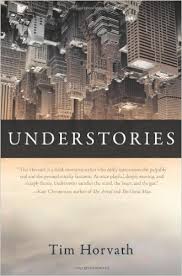
A reviewer for NPR's Morning Edition called Tim Horvath's story collection, Understories, "My favorite collection of short stories in recent memory."

A reviewer for NPR’s Morning Edition called Tim Horvath’s story collection, Understories, “My favorite collection of short stories in recent memory.”

Tim Horvath is the author of Understories and Circulation. His stories have appeared in Conjunctions, Fiction, The Normal School, and elsewhere. His story “The Understory” was selected by Bill Henderson, founder and president of the Pushcart Press, as the winner of the Raymond Carver Short Story Award. He teaches creative writing in the BFA and low-residency MFA programs at the New Hampshire Institute of Art and has previously worked as a counselor in a psychiatric hospital, primarily with adolescents and children and young adults with autism. He received his MFA from the University of New Hampshire, where he won the Thomas Williams Prize. He is the recipient of a Yaddo Fellowship, occasionally blogs for BIG OTHER, and is an assistant prose editor for Camera Obscura.

To read Horvath’s story “Fuchsia Maroon Timberwolf,” and an exercise on moving a story forward, click here.

In this interview, Horvath discusses how characters engage with time, treating language and sentences as a game, and providing emotional cover for a protagonist.

Michael Noll

This story moves through time so easily that it’s easy to overlook how impressive this is. The beginning of the story, for instance, starts in the present and by the third sentence, has moved firmly into the past—but it doesn’t get stuck in the moments of baby food and crayons. Is this something you do naturally, or do you find yourself making conscious decisions about moving through time in a story?

Tim Horvath

I think you’ve asked the right question here, one of the most bullseyeish you could’ve posed, because the question of time is key to everything I write—how does the past bear on the present, how are these characters engaging with time, etc.? Every story/work imposes its own time scheme and challenges. With the novel, for instance, I’m trying to balance the weight of entire lives with the events of a particular summer which serves as the story’s present moment. And also balance musical time with storytelling time. I’m kind of on this many-sided warped-wood see-saw, running back and forth and trying to get it to work with some semblance of gracefulness.

In the case of this story, the narrator is tracing back a sort of timeline of “how did I get to this moment?” and doing so demands that he go back to his daughter’s childhood, but there’s a Big Bang quality to the shape of the narrative where it is compressing all of those moments into a single moment. The “life flashing across one’s eyes” phenomenon is dubious to me, but, like most dubious things, it can work under the right conditions in fiction, with its preternatural ability to pummel and pinch time into the shapes it needs—see Calvino’s “All at One Point” or Nicholson Baker’s The Fermata or the magnificent end of “On the Rainy River” from The Things They Carried where Tim O’Brien sits on a rowboat deciding what to do with his life, roiling with anguish as he teeters between whether or not to try to dodge the draft, which is really to say choosing between two possible futures for himself. Even though we already know what he’s chooses because of the rest of the book, O’Brien slows time to a brutal crawl.

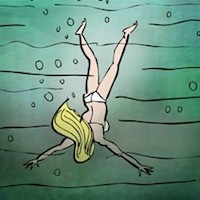
It’s a kind of diving board moment, the suspension in midair, that a story can linger in and even unfold in. I would say that the use of the word “How” here to propel the narrative forward became a way to ensure I didn’t get caught in any particular rut of time, didn’t get mired in the quicksand of memory or “what if.” It’s as if that word becomes an engine propelling the story forward, a device that the narrator will use to catalogue his life and his daughter’s life, their high and low moments, tracing them with the intensity of a forensic scientist. But it also means that in the background of the story there is a steady beat, this echo of “How. How How.” It’s important that the word is “How” and not “Why?” “Why” is too overt, too in-your-face. We all want to know why—the narrator wants to know “why,” but will ask “How” instead, partly because unlike “Why,” which seems to pose a question by its very nature, “How” can seem to be providing answers, as in “How-to Guides” and the like. “How” can be a word of marveling at what is, rather than attempting to unravel the causes of what is. And so while seeking to unravel “why,” the narrator hides behind the mask of “how.”

Michael Noll

The story uses repetition, starting many sentences with “How…” It’s probably natural to use repetition to drill into a moment, to explore all of the angles of a single point in time, but that’s not what you do. Instead, you keep pushing the story forward even as you repeat the same syntax. At what point in the drafting process did you realize, okay, I’m going to stick with this sentence structure?

Tim Horvath

Tim Horvath's collection, Understories, "revels in wordplay and inventiveness."

Tim Horvath’s collection, Understories, “revels in wordplay and inventiveness.”

At first it was a kind of a game, a generative one. I always had the first word of the next sentence—phew! It actually became important to me to break with that at various points—to throw in a couple of sentences without “How” in order to make sure it was not formulaic. I always wanted the possibility of something else, so the reader couldn’t get too comfortable. It was important that they be fragments, too—there’s something liberating in them. Quickly, I found that the scaffolding allowed me to focus more on the character and his emotional/psychological condition than a more conventional story. Having that middle square in Bingo where I was “given” the first word in the next sentence meant that I could pay more attention to him, his relationship with his daughter, and the language in the rest of the sentence, which had to push toward something unexpected in each case to offset the (mostly) predictable openings.

Michael Noll

The he of the story goes through a pretty rough time. The exact nature of it isn’t entirely clear, but we learn enough to know that it’s bad. Were you ever tempted to explain his situation clearly—or did knowing or conveying that information not matter to you as you wrote?

Tim Horvath

I suppose another purpose of the “Hows” is that they provide a bit of a smokescreen, emotional cover for the protagonist. Don’t mind me and my wounds and scars, they seem to say. Focus on this mantra instead. Focus on moving forward, one sentence fragment at a time. Focus on the “Refresh, Refresh,” to quote Ben Percy’s great story, of language itself, with its reassurance and promise, with each new sentence, of reinscribing and thus reinventing the universe, of getting things right, of undoing the damage, shaking the Etch-a-Sketch back to mint condition. Each sentence dawns in the East of its opening. Meanwhile, you’re absolutely right that there’s pain bubbling and churning down there, between those fresh starts. But as for the particulars of his situation, well, to me that is less material. I was more interested in a character taking stock of his life as a whole, and to him, frankly, the particulars are less important than the prospect of salvaging some kind of relationship with his daughter. He is painting with a broad brush, in a sense, getting the general shapes and contours of his life on the canvas. If he can get those, maybe he can stand back and behold himself. I don’t think he’s conscious of this exactly—maybe in a weird way he’s actually emulating his daughter’s art.

Michael Noll

This story is not an outlier in terms of style. While you don’t always use repetition in quite this way, this story is certainly of a piece with your other work. I know you’re working on a novel now. What has it been like to adapt this style to that longer structure. Were there writers that you looked to for models?

Tim Horvath

The novel has presented all kinds of challenges. One of the greatest has been writing about music in a way that does justice to the subject and doesn’t make me look too far out of my depth. I’ve long been obsessed with music, but my response has been very intuitive, and now I’m writing about imagined classical composers, who of course also have an intuitive sense but are steeped in actual technical knowledge. In researching, I’ve spent countless hours with composers, musicians, and musicologists, sitting in on rehearsals and theory classes, going to bars after concerts, and that world is so rich and intricate and various that I’m continually floored, which is a great thing—may it never get old!  The main character, whose third person perspective we’re in, is the more experimental of the composers, hence the narration also has to have a somewhat thorny quality, yet I want the prose itself to have a musical quality, since that’s one of the main things I’m drawn to in prose in general. I’d like to think that Understories cuts a pretty wide stylistic swath in general, with some stories blatantly playing with language while others are more obsessed with character and relationship, and some are fixated on landscape and some are staking out some territory of ideas, and in the end I’d hope that many are doing several at once. There’s a story that Lisa Cooper Vest told at a recent conference I attended on “Musicology and the Present” which might be apocryphal but I suppose could be real, of the great Polish composer Penderecki writing out two scores with different hands so that he could enter both of them in the same competition and not have them be traceable to the same person. Now, according to the story, Penderecki won first, second, and third in the competition, which leads to the natural question—what or where was the third hand? In some ways, it feels as though I’ve tried to write my stories three-handedly, and I think that I’m trying to coordinate the work of these hands a bit more in the novel, figure out their rhythms and choreography, but it remains to be seen what that will look like in the end.

November 2016

Michael Noll Michael Noll is the Editor of Read to Write Stories.
An Interview with Hasanthika Sirisena

3 Nov
Hasanthika Sirisena is the author of the story collection, The Other One, which won the 2015 Juniper Prize for Fiction.

Hasanthika Sirisena is the author of the story collection, The Other One, which won the 2015 Juniper Prize for Fiction.

Hasanthika Sirisena is the author of the story collection, The Other One, which won the 2015 Juniper Prize for Fiction. She is associate fiction editor for West Branch literary magazine and a visiting professor at Susquehanna University. Her essays and stories have appeared in The Globe and MailWSQThe Kenyon ReviewGlimmer Train, Epoch, StoryQuarterly, Narrative, and other magazines. Her work has been anthologized in The Best New American Voices and twice named a distinguished story by Best American Short Stories (2011, 2012). Sirisena has received fellowships from the MacDowell Colony and Yaddo, and, in 2008, received a Rona Jaffe Writers Award.

To read an exercise on figuring out what really drives a character to act, based on Sirisena’s story “Ismail,” click here.

In this interview, Sirisena discusses writing characters different who are different than yourself, compressing backstory, finding the end of a story, and what comes next for the Sri Lankan political environment that informs her work.

Michael Noll

One of my favorite passages in the story is this one: 

If you go long enough without something, sex, money, even love, you can get to the point you don’t need it. But if you suddenly have access to what’s missing, get it back in your life, then you’ll do whatever it takes to keep that thing. The thought of loss knocks you flat on the floor, your chest caved in, gasping for air.

For me anyway, it’s the emotional heart of the story and the key to everything that happens in it. Was it in the draft from the beginning? In other words, was this desire what drew you into the story? Or was it something you discovered as you wrote?

Hasanthika Sirisena

It came to me as I wrote. Some readers tell me that they think Ismail is a jerk. And there are aspects of his character that are insensitive. But I also see him as someone who has undergone a terrible trauma and, understandably, has chosen as his coping mechanism a front of humor and bravado. In some sense, I see him as brave. He has to keep going for his father and his brother. But he also allows himself some awareness.

I’m not particularly interested in characters who look like or talk like me. I try to invent people I want to know and understand better. To do that, I try to find a point of empathy—something that we both might share. Though Ismail and I have had different life experiences, I know what it feels like to live without, and I realized as I wrote him that he did to. And I also try to pretend in my life that I’m very tough to hide a profound vulnerability and fear, as he does. Ismail c’est moi!

Michael Noll

The story covers a lot of time, and a lot of that time is compressed into short passages, like the one about how Abdul begins to blow off the narrator. When you’re in the midst of a story, how do you know which information to dramatize and which information to summarize?

Hasanthika Sirisena

For this story I constructed a traditional narrative arc. Ismail has a fairly simple desire: to get back at his friend. But that desire is wrapped in his own fear of losing his brother and of not really fitting into American society. I chose to dramatize those scenes that were key to that relationship and the conflict between the two brothers. Ismail constantly tries to test his brother and make him prove his loyalty. Other parts of the story: the past in Sri Lanka, the burgeoning relationship between the little brother and his girlfriend weren’t part of that central drama so I compressed and summarized that.

Michael Noll

Hasanthika Sirisena's collection, The Other One, won the 2015 Juniper Prize for Fiction.

Hasanthika Sirisena’s collection, The Other One, was called “unforgettable” and “lucid and wise” by Claire Messud.

The end of the story is great. I can’t imagine it ending any other way, but I know from experience that even inevitable endings are anything but when a story is being written. Did you always know where the story was going?

Hasanthika Sirisena

The end of this story was hard! It took me three years to write this story—to get it right—and that was mostly because of the ending. I’ve learned in my career you have to get the ending absolutely pitch perfect. The emotional impact is usually as subtle as the correct beat. The right beat and the reader goes ‘wow.’ The wrong beat and you have one angry reader because she’s been with you the entire way only to be let down. It’s daunting. (As an aside, I’m surprised at how many stories we end up saying no to at West Branch simply because the ending isn’t quite right.)

Ismail is so invested in his toughness that any type of epiphany ending—where he realizes something significant about himself—would feel contrived and unearned. To me that sort of ending also ran the risk of being extraordinarily condescending to the character. But I did want to find a way to show that he really is a very good man. It finally came to me one morning, as I was waking up, that I needed to end on an image—Ismail with his hands in the air surrendering. And then the rest, of him watching his brother get away and being thrilled, just came to me. Of course, he’d surrender to save his brother. It fits his essential bravado and it also fit the depth of his love.

Michael Noll

The event that informs so many of the stories in The Other One is the Sri Lankan civil war, which ended recently. Now that the country is more stable and has gone through a contentious election mostly without violence, does that change your sense for the kind of stories you want to tell? Does the war continue to be part of your narrative imagination?

Hasanthika Sirisena

As someone who writes about Sri Lankans and who most likely always will, the war is impossible to ignore. I do though recognize that the war touches Sri Lankans in degrees and honor the impulse within the community that the war is not all there is to being a Sri Lankan.

That said, I also think that while the military conflict has ended and the LTTE have been defeated the social and cultural conflicts that led to the war on the first place haven’t been corrected. There have been advances: the return of some of the land taken from Tamil families in the North, for example. But, the Sri Lankan military continues to maintain a strong presence in the North. Recently, the police shot and killed two Tamil students at a checkpoint in Jaffna. Last week, I was on a panel about contemporary Sri Lankan writing. During the Q&A, a Tamil writer’s stories of disenfranchisement were dismissed wholesale by an audience member as fantasy and nostalgia. There was no attempt at understanding. There needs to exist thoughtful, careful, and diverse writing that insists on establishing and respecting all the narratives. I think there is a moral and ethical imperative to work toward that end not just through my own work but by supporting the writing of Sri Lankan nationals and writers of the diaspora.

November 2016

Michael Noll Michael Noll is the Editor of Read to Write Stories.

An Interview with Natashia Deón

27 Oct
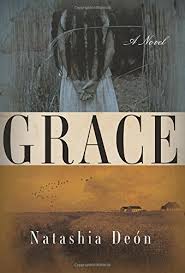
Natashia Deón is the author of Grace, a novel that has earn rave reviews and comparisons to the work of Toni Morrison.

Natashia Deón is the author of Grace, a novel that has earn rave reviews and comparisons to the work of Toni Morrison.

Natashia Deón is the author of the novel Grace. She’s the recipient of a PEN Center USA Emerging Voices Fellowship and has been awarded fellowships and residencies at Yale, Bread Loaf, Dickinson House in Belgium and the Virginia Center for Creative Arts. Named one of 2013’s Most Fascinating People by L.A. Weekly, she has an MFA from UC Riverside and is the creator of the popular LA-based reading series Dirty Laundry Lit. Her stories and essays have appeared in The Rumpus, The Rattling Wall, B O D Y, The Feminist Wire, and You: An Anthology of Second Person Essays, among others. She has taught creative writing for Gettysburg College, PEN Center USA, and 826LA. A practicing lawyer, she currently teaches law at Trinity Law School.

To read an exercise on creating tension by playing against reader expectation based on Grace, click here. (If you’re in the Austin area, you can see Deón at the Texas Book Festival on Sunday at 2:00 on a panel with Yaa Gyasi.)

In this interview, Deón discusses writing in dialect, writing within genre perceptions and writing violence.

Michael Noll

In an interview at The Nervous Breakdown, you quoted Walt Whitman: “Language is not an abstract construction of the learned, or of dictionary-makers, but is something arising out of the work, needs, ties, joys, affections, tastes, of long generations of humanity, and has its bases broad and low, close to the ground.” How did you find that close-to-the-ground entry to the language of the characters in your book? To my reading ear, it sounded fresh and almost contemporary, not stilted the way that some historical fiction dialogue can. What was your approach to these characters’ language?

Natashia Deón

In every writing class I had ever taken before finishing Grace, I had been taught that one of the golden rules of writing was to never write in dialect. And even though “the rules,” which otherwise seemed sound, also said that it was acceptable to deviate from these “rules,” every writing instructor, writer, speaker, who discussed language and voice always seemed to come back to that same advice: Don’t write in dialect. Or, if you do, do so sparingly. I struggled with that advice. I struggled because the voice I wanted to create for the main character, the narrator of Grace, was in dialect. For a long time, it kept me from writing at all.

Eventually, I gave myself permission. Not because someone told me yes but because I told myself yes. Every day, writers have to tell themselves yes. You are good enough. What you have to say is good enough. You matter.

Maybe it seems obvious to other writers. It wasn’t for me. And coming to that realization was a moment of freedom. But permission was only the beginning. New questions arose about dialect. For instance, I didn’t want readers to assume that my narrator’s dialect was a reflection of her intellect as people often—wrongly—assume about a southern accent. But, rather, that her language was an expression of her exposure and physical limitations. As a writer, this was one of my biggest challenges. How would she express herself if she didn’t know a word like “compete” or “busking?” If it wasn’t in her vocabulary, how would she say those words without using the word? Then I’d have her describe the word in three words or less. And here she was about to narrate the entire novel. In something like poetry.

A New York Times review said of Natashia Deón's debut novel Grace, "her style is so visual it plays tricks on the imagination — did I just watch that scene? Or did I read it?"

A New York Times review said of Natashia Deón’s debut novel Grace, “her style is so visual it plays tricks on the imagination — did I just watch that scene? Or did I read it?”

Maya Angelou once said, “English remains the most beautiful of languages. It will do anything.” In writing Grace, I had to decide what I wanted the language to do. In the early drafts, the dialect was much more rugged. I thought accuracy was the primary point of dialect. So the language in Grace was phonetically accurate to the time and place. And it didn’t sit well with me. As I revised, I began to understand that I was creating a language pattern, somewhere in between the past and our present use of English in the U.S. And in this new understanding, I had to make a decision about how hard I wanted readers to work, and about other craft issues like what I wanted the dialect to do. Do in the sense that everything in a scene, every word, serves the scene. If I read that there’s a fire burning in the fireplace, it needs to serve—ambiance, some future purpose, frame a moment, a thought. Usually, it does more than one thing. In the same way, my narrator’s language had to serve and not just exist on the page…accurately.

So, her language evolves in the novel as she goes on her journey, and it reaches us here in the future, blending the past and present together, which is one of the  themes in Grace. For this reason, her language softens. She learns new words, speaks differently as she’s exposed to new people, new experiences. The same way you or I would. And in this way, her language is close to the ground. It is alive. And my goal was for readers, after the first chapter or so, to read it effortlessly.

Michael Noll

In a recent New Yorker review of the film Birth of a Nation, Vinson Cunningham writes, “The formulas of this genre are nearly as old as the movies. They were introduced to audiences at the beginning of the twentieth century, when Harriet Beecher Stowe’s novel Uncle Tom’s Cabin was adapted, over and over, for the screen…This decade has seen another burst of interest: in 2013 alone, there were seven feature films about slavery. Most of them bore the distinct trappings of upper-middlebrow art—they were the sorts of movie that attract critical plaudits and awards.” He goes on to write, “Slavery in this country was never a hero’s journey. It is a ghost story,” As soon as I read this, I immediately thought of your book, which, of course, is a ghost story. Your novel also doesn’t strike me as “upper-middlebrow art.” And, because of Naomi’s journey out of slavery, it feels like a different approach to the “slavery genre.” How much did you try to write toward or away from the ways this type of story has been told in the past?

Natashia Deón

When I first began to write Grace, as strange as this may sound, I never set out to write a slave narrative. All of the main characters are not slaves. I saw them first as people, not defined by their station, though their station was of serious consequence.

For me, Grace is and was always a story about women. Women who are survivors, who fight valiantly, and learned to keep their dignity and humanity despite their circumstances. Women who created families of their choosing when family was withheld from them—families that were more than blood but a powerful kind of kinship. And the black people in this story, some of whom are slaves, were not only brutalized bodies or victims of a dehumanizing system, but resilient lovers, dreamers, mothers, daughters, thinkers, heroes, and more. This was always Grace. And Grace is also a slave narrative.

There is diversity even within genres, within any life, real or imagined. Freedom in Grace isn’t a place to get to. It’s not north. It’s a question that all of the characters—Black, White, Latina, and other, have to ask themselves. It’s what we all have to ask ourselves today. Is what we have right now freedom?

I am honored that Grace is included with other great books about slavery—BelovedThe Known World, and others. And because America hasn’t been out of slavery for as long as we were in it, I imagine that there are books coming in the future that will continue to give fresh eyes to this period of time. And those books, like books about baseball, won’t care how many brothers or sisters it has.

Michael Noll

The book contains some scenes that are really difficult to read: graphically-rendered murder and sexual violence. The scenes aren’t gratuitous at all. Each one is necessary and well-written, but I also wonder if you worried about losing readers. To paragraph a character from the novel, not all women have the same sort of strong, and not all readers have the same capability for reading scenes and stories like these. Did you think at all about how to keep readers turning the page in the midst or after such scenes?

Natashia Deón

Yes, I worried about losing readers. But not when I was writing it. I wanted to stay true to the story, to the things that have haunted me in dealing with violence in real life. Our country, our world, is a violent place. We live in a society where even death and the dead are removed from our sight at once. And most of us are blessed to be removed from those realities and the realities of violence, except for occasional episodes in our lives, or what we see on our computer, phone or television screens. I say this because almost all of the descriptions of violence in Grace are details of real life cases I haven’t been in a position to look away from as an attorney, a friend, family member, etc. The violence in Grace was my response to the quintessential command: Write what you know. The violence rings true because it is true. Of course, fictionalized. But I didn’t want to hold back in creating. I was asking readers to trust me to get them through it. I wanted to be trustworthy, for my narrator to be trustworthy. It was a gamble. A choice. And in the end, I wrote the book that I wanted to read, that I felt compelled to write, that I felt readers were ready and mature enough to hear. One that was honest in every way that it could be.

October 2016

Michael Noll Michael Noll is the Editor of Read to Write Stories.

An Interview with Rahul Kanakia

23 Oct
Rahul Kanakia

Rahul Kanakia’s debut YA novel Enter Title Here is “meant to make you uncomfortable,” according to a New York Times review.

Rahul Kanakia is the author of a YA novel Enter Title Here. His short stories have appeared in Clarkesworld, Apex, Nature, and the Intergalactic Medicine Show. He holds an MFA in fiction from Johns Hopkins University and a BA in Economics from Stanford University. He previously worked for the World Bank in their South Asia Environment division.

To read an exercise on turning desire into motivation and plot based on Enter Title Here, click here.

In this interview, Kanakia discusses likability and didacticism in YA literature, the inspiration of the Kaavya Viswanathan plagiarism story, and his approach to writing about racial and cultural bias.

Michael Noll

In films about high school students (particularly in stories like this one), characters tend to be likeable. If they’re not, we understand that they’ll become likeable at some point. But that’s not really what happens in Enter Title Here. As one character puts it, Reshma is “too intense.” She pursues her goals a bit like Breaking Bad‘s Walter White. Obviously, the question of likeability, especially for female characters, has been a hotly-debated issue. I’m curious how you approached her character. Did you ever worry about whether readers would like her? Did that even matter to you? Or were you more concerned with making her, say, interesting or compelling?

Rahul Kanakia

During the drafting process I never worried about her likability, because I actually never thought she was unlikable. I still don’t! I like Reshma immensely, and if I was a teenager I’d totally be her friend (except that she doesn’t have friends). In fact, in real life I’m friends with more than one person who bears a resemblance to her, and I value them all for their insight and charm, even if I wouldn’t necessarily take my moral guidance from them.

I’m actually a little perplexed as to why everybody doesn’t love her as much as I do. I think part of it is that this is the YA field, which is still a little on the didactic side: there’s a definite emphasis on teaching students and providing role models. But I think it’s also to some extent a mismatch with the audience. Lots of YA readers really identified with their teachers and enjoyed the academic side of school. They got good grades because they cared about learning, and they take justifiable pride in that performance. To them, cheating is anathema. Whereas to me, it’s intuitively obvious that school is BS and that grades are just made-up numbers. I think the more you fall on my side of the equation, the more you see Reshma as a rebel rather than a villain.

Michael Noll

Rahul Kanakia's novel Enter Title Here has a main character that Barnes and Noble's Teen Blog called "a genuinely unique protagonist: unintentionally funny, often mean, and uncompromising in the lengths she’ll go to get what she wants."

Rahul Kanakia’s novel Enter Title Here has a main character that Barnes and Noble’s Teen Blog called “a genuinely unique protagonist: unintentionally funny, often mean, and uncompromising in the lengths she’ll go to get what she wants.”

This novel bears some resemblance to the real-life story of Kaavya Viswanathan, the Harvard undergraduate who plagiarized two novels in her own book. How much did you pay attention to that case when writing this book? Did you consciously write toward that story or away from it? Or was the novel simply inspired by it and you ran with the idea in your own way?

Rahul Kanakia

Her story was definitely an inspiration. Although I haven’t read it, I know that her novel How Opal Mehta Got Kissed, Got Wild, and Got a Life is about a type A Indian-American girl who comes to believe that in order to get into college, she needs to “get a life” and so sets out consciously to acquire a boyfriend and a group of friends and all those other teen contrivances. Sound familiar? That’s basically the novel that Reshma is trying to write.

However I obviously took my book in a different direction. I think part of the reason the Kaavya Viswanathan story got big was because it was too delicious. It played into all these stereotypes we have about uncreative (usually Asian) perfectionists. People who can say the right thing, but who have nothing inside them. In my novel, I wanted to show that there is something inside. I wanted to show that there is a lot of courage and determination and intelligence involved in the struggle to rise to the top. In fact, I think Kaavya Viswanathan herself demonstrated a lot of that canniness when she, a teenager who’d never completed a novel, cobbled together bits of Salman Rushdie and Megan McCafferty to write a book that was, by all accounts, eminently readable. In the process of doing which, she hurt nobody (did Salman Rushdie’s sales go down as a result of this incident?) and would’ve made quite a bit of money for herself and for her publisher.

Michael Noll

There are moments when Reshma says some pretty pointed things about race/ethnicity—particularly about how America adjusts the rules to benefit white people and disadvantage Indians and Indian-Americans. What I found so interesting is that I’d be nodding at one of these passages, and then the novel would quickly introduce some element that threw the passage into an entirely different light, often complicating it. Did you do this naturally? Or were you consciously trying to avoid moments where the novel was trying to “say something important”?

Rahul Kanakia

I think that a lot of Indian-Americans perceive a bias against themselves in a lot of arenas. I think that in many cases that bias is real, but it’s difficult to prove because it’s hidden by the generally good results that Indian immigrants have, collectively, achieved. I mean lets face it, Asian-Americans have the highest median household income and the highest average educational attainment in America. (And out of the Asian subgroups, Indians have the highest numbers, so all of this is even more true for Indians.) When it comes to Indians, at least, we’re also well-represented in business and culture. An Indian-American has won the Pulitzer Prize for fiction. There are dozens of Indian-Americans on the cast of major television shows (including several starring roles). Pepsi, Google, and Microsoft are all run by Indian CEOs.

So for a person to say Indian-Americans are discriminated against, they would have to make a pretty nuanced argument, and it would go something like this, “Given our educational levels and family income, we should be even more successful than we are.” And I think that’s an argument which needs to be made because I think its true. Discrimination hobbles Indian-Americans and prevents us from doing as much as we could otherwise do.

However, I still cannot go out there and write a book that says, in an uncomplicated way, that Indian-Americans have it tough because that’s just not true. Some Indian-Americans have it tough; the ones who are already poor or whose parents have little education. But in general our lives in this country aren’t that bad. And that’s where Reshma finds herself. She’s making true arguments, but she’s also better off than 95+% of people in America.

Michael Noll

You write in the Acknowledgements that the novel wasn’t always about Reshma’s relationship with her parents. That relationship, which is a major piece of the novel, was suggested by someone and developed after you’d already written a lot of pages. That seems like a major revision. How did you approach changing the novel to include that conflict?

Rahul Kanakia

Well it wasn’t easy!

But I now have a lot of experience at revising novels to change major plot points, and you’d be surprised at how doable it is. You don’t need to rewrite the entire book. The thing is, a novel is composed of layers. And each of these layers shows a different facet of your character. So in some ways it’s not terrible if your character acts slightly differently in different parts of the book, because that contributes to the impression that they’re multi-faceted.

Basically what I did was I rewrote every part of the book that contained the parents, and I toned down or eliminated some parts that dealt with Chelsea and the perfects. I just started at the beginning and went through the novel, scrubbing as I went. It’s actually a very powerful and fun feeling, this sort of alteration, because it’s almost like you’re writing the book anew, but you don’t actually have to rewrite the book

October 2016

Michael Noll Michael Noll is the Editor of Read to Write Stories.
An Interview with Laurie Stone

20 Oct
Laurie Stone is author of My Life as an Animal, Stories (TriQuarterly Books, Northwestern University Press. October 2016), the novel Starting with Serge (Doubleday), and the essay collection Laughing in the Dark (Ecco). She is editor of and contributor to the memoir anthology Close to the Bone (Grove). A longtime writer for the Village Voice (1974-1999), she has been theater critic for The Nation and critic-at-large on Fresh Air.

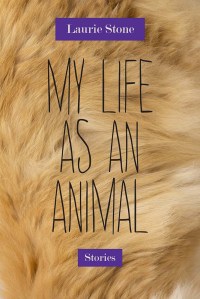
Laurie Stone’s new book, My Life as an Animal, “has an intelligence rare in contemporary American fiction,” according to Jeffrey Renard Allen.

Laurie Stone is the author of My Life as an Animal, Stories, the novel Starting with Serge, and the essay collection Laughing in the Dark. She is editor of and contributor to the memoir anthology Close to the Bone. A longtime writer for the Village Voice (1974-1999), she has been theater critic for The Nation and critic-at-large on Fresh Air.

To read an exercise on using backstory to create drama in the present based on My Life as an Animal, click here.

In this interview, Stone discusses her approach to truth and fiction in “stories,” jump cuts, and why talk of therapeutic writing sends her to the bar.

Michael Noll

My Life as an Animal is subtitled stories, and I’m curious about that. The narrator has your name, and Richard and Andre Glaz (two of the most important characters in these stories) both appear in “Tangled,” an essay you published in Joyland, (I found that essay because, in the book, you tell the reader to google André Glaz, and so I did!) So, I’m assuming that the book, which is fiction, is based in large part on your own life. I’m not interested so much in what is true and what has been invented. Instead, I’m curious about the decision to fictionalize. It’s one that I think a lot of essayists and memoirists face. What made you decide to write these as stories instead of essays? What was your approach?

Laurie Stone

I am delighted you read the piece in Joyland. First, I’d like to speak about the way I view literary genres in relationship to my work. Pretty much everything I write these days is a story. The pieces in this book and elsewhere are dramatic narratives. I would say this of much of my criticism as well, such as a long appreciation I wrote about Spalding Gray published in American Theatre. The piece is a monologue about Gray, a story. It’s not about me, and yet it reflects the elements in Gray’s work and life that quickened my thoughts. That is what I am interested in communicating. What I find sexy, scary, surprising, strangely ordinary or ordinarily strange. My work incorporates elements of fiction (scenes, dialogue, the build-up of dramatic revelations, etc.), memoir (some of the stuff described happened in some form or other), criticism (my narrators enjoy thinking about art and politics), and nonfiction (some of the reporting is journalistically verifiable).

I do not consciously “fictionalize” events. In literature, I am not especially interested in things that happened because they happened. I am interested in whatever I find dramatic. It might be the relationship I had with André Glaz, a psychoanalyst I saw in treatment who, during my teenage years, took me into his bed. Or it might be driving in Scottsdale’s soul-crushing heat to buy a $5 Ikea rug from a woman about to return to Kolkata. The term “essay” does not apply to my work generally. I don’t seek to convey meaning or understandings. I hope I am staging little provocations for the reader to react to anyway the reader wishes.

I do not believe circumstances are intrinsically interesting or uninteresting. Narrators create interest by their passionate investment in the story they are telling. They do this by layering in two time frames. Something happens, the narrator reports a response at the time it happened, and the narrator also looks back and weighs in on the incident now—at the time of the telling—whether the look back is five minutes later or 20 years later. The reader attaches to a story the reader can enter as if the story is about the reader. The less the narrator asks for something from the reader, i.e. feel my feelings, share my understandings, love my friends, hate my enemies, sentence my parents or siblings or lover to death, etc., the more room readers have to feel their own emotions.

The stories are constructed through language, not memory. I write at the level of the sentence. I sit there, looking at the doors and windows a sentence has opened for the sentence that can follow, and so on. I do not write with a plan. I do not know where a story is going ahead of time. There is no prewriting. It all happens in the moment of looking at the words. To get back to your interest in André, I return to him over and over because he stirs contradictions that can’t be resolved. Those are the stories I want to read and write.

Michael Noll

You play with chronology quite a bit. The first story takes place after many of the stories that follow it. In “Leaving Gardner,” the chronology is continually scrambled, with the narrator describing Gardner’s death and them jumping to a time before it and then after it. What was your sense for when to use straight chronology and when some other element made it less important?

Laurie Stone

I start with a dramatic moment and look at it from as many perspectives as I can. I do not know of a story worth its salt that proceeds chronologically. We think associatively. If I am listening to a person tell a story, and they start with getting up and listing what they had for breakfast before getting on the bus where they found themselves next to a lost child who could not speak, I move away for a drink long before learning there was a diamond clasped in the child’s grimy paw.

Michael Noll

Laurie Stone's new book, My Life as an Animal, is about a woman a woman constantly seduced by strangers, language, the streets in the downtown scene of New York City in the 70s, 80s, and 90s.

Laurie Stone’s new book, My Life as an Animal, is about a woman a woman constantly seduced by strangers, language, the streets in the downtown scene of New York City in the 70s, 80s, and 90s.

On a similar note, one of the things I love about your stories is your ability to jump from one topic to another seemingly unrelated topic with incredible speed and while maintaining a clear sense of direction. I was particularly struck by a passage in “Toby Dead” that jumped from Nebraska City to Gertrude Stein and William James and then to the narrator’s family. How many of these asides and jumps were trimmed or cut from the manuscript? What’s your measure for how far you can stray or jump from the main thread of a story?

Laurie Stone

I am glad you commented on the jump cuts in the texts. I use a number of techniques shared with film and visual art, among them montage, fades, collage, bricollage, etc. The sections you refer to are not “asides.” For there to be “asides,” there would need to be a central intention. Nothing was cut or edited out because it was extraneous. I cut when a sentence is repetitious, obvious, or clichéd. If you feel there is a dramatic build-up in the stories, and I hope you do, it comes from adding complexity or switching from direction A (melancholy in separateness) to direction B (ecstasy in solitude). I hope connections for the reader will jump across the border between one thing placed beside another thing . . . the way we understand what is happening from montage in film . . . a shot of a cat in an open door, the next shot of a mouse behind the leg of a chair. I wonder what you felt reading the example you gave. Having put those bits together experimentally, I can offer this reading now: the narrator of “Toby Dead,” who is caring for a mother she does not actively love, expresses her ease with abjection in two anecdotes of disappointment and entrapment. The juxtapositions are also funny, I hope. As often as possible, I am looking to find comedy in weird, cruel, and sad moments.

Michael Noll

The story “André” is about a difficult, awful subject: the narrator’s sexual assault by the psychoanalyst André Glaz. The trauma is clear in how the piece is written. For example, the narrator tries to describe the way that Glaz has stayed with her for years and says, “He formed me. Not really.” Then she tries out a few other descriptions that don’t quite seem to capture what she feels. And yet I was also struck by how sympathetic your portrayal of Glaz was. For example, you write that the narrator read two articles Glaz had written and was “surprised by their sensitivity.” What was your approach to the character of Glaz? It would be easy and justified in portraying him as a monster, but he comes off as something more complex. Was that difficult to achieve?

Laurie Stone

There would be no story unless André was complex, and I think readers would lose interest in a one-dimensional character. He must have had something compelling in his personality to seduce so many people, albeit naïve and striving ones. It is not emotionally difficult for me to write complexity into a character. If trauma gives you a subject over and over, let’s raise a glass to trauma. When people speak of writing as cathartic or therapeutic, I am off to the bar for another drink. Mel Brooks says, “Comedy equals tragedy plus time,” and I’ll go with that. When I’m working, I think, “Okay, if there are no heroes and no victims . . . what does that leave?” I have to be on guard against flashing and showing off—asking the reader to look at me and like me. For me the hard thing to re-experience over and over is Gardner’s death. That section is clinical and listy, and yet for me the most wrenching. The rest of this book, honestly, is a bunch of sentences.

October 2016

Michael Noll Michael Noll is the Editor of Read to Write Stories.
An Interview with Leona Theis

13 Oct
Leona Theis is the author of two books and the winner of the American Short Fiction contest, judged by Elizabeth McCracken.

Leona Theis is the author of two books and the winner of the American Short Fiction contest, judged by Elizabeth McCracken.

Leona Theis lives and writes in the musically-named Saskatoon, Saskatchewan, Canada. Her collection of interlocking stories, Sightlines, is set in small-town Saskatchewan. Her novel The Art of Salvage is a story about messing up and finding hope. She is working on two other novels and a collection of essays. She is the winner of Canada’s CBC Literary Award, and her personal essays appear in Brick Magazine, Prairie Fire, The New Quarterly and enRoute. Recently, one of her short stories appeared in The Journey Prize Anthology. Her story, “How Sylvie Failed to Become a Better Person through Yoga” won the American Short Fiction contest judged by Elizabeth McCracken and appears in the most recent issue of American Short Fiction.

To read an exercise on making characters represent a place or group based on Theis’ story “How Sylvie Failed to Become a Better Person through Yoga,” click here.

In this interview, Theis discusses writing about internal conflict in the midst of external drama.

Michael Noll

A lot of the action in the story happens off the page. The scenes seem to focus instead on the interactions and moments that happen in the wake of that off-page drama. I was particularly struck at how the story avoided certain storylines. For example, the drama that’s built on Lisa and Dave’s relationship is an important part of the story, but it remains secondary to what’s going on with Sylvie. Another writer might have made it a much bigger part of the story: what will Lisa do? What will Sylvie do? Those questions are present, but they’re kept to a lower register. In the same way, there is a developing romance with Will that gets folded into all of the other stuff going on in the story. As a result, one could call this a love story, but that wouldn’t feel quite right, I don’t think. When you were working on this story, what was your sense of what kind of story it was? Was there a tag that you placed on it in your mind? Like, “this is my love story” or “this is my yoga story”?

Leona Theis

I never did think of this as “a yoga story” or a “love story”. My process in developing a story or an essay is almost always exploratory for the first few drafts, and that was the case with this one even more than usual. It began with memories of a time and a place that I wanted to explore for meanings. I had quite a lot of it drafted before I figured out that its true subject was the drama going on inside Sylvie, a drama she’s only partly aware of. Once I’d decided what the story was about, I rewrote it several (in fact, many) times, hoping to make all the parts of it work together to make that drama felt.

I wrote this story to stand on its own, but I couldn’t leave Sylvie alone, and eventually it became the second chapter in a novel-in-stories called “If Sylvie Had Nine Lives.” (I’m just about to query agents about it now.) The story of Sylvie and Jack, which is, as you say, “off the page” here, plays out in the story that precedes this one. (That story, “High Beams”, appeared a couple of years ago in The Journey Prize Stories 26, in Canada.)

Leona Theis' story "How Sylvie Failed to Become a Better Person through Yoga" appears in the latest issue of American Short Fiction, alongside Matt Bell, Smith Henderson, and Porochista Khakpour.

Leona Theis’ story “How Sylvie Failed to Become a Better Person through Yoga” appears in the latest issue of American Short Fiction, alongside stories by Matt Bell, Smith Henderson, and Porochista Khakpour.

The tension between Lisa and Dave is apparent in “How Sylvie Failed…,” as is Sylvie’s response to it, but I didn’t put much of the actual, physical goings-on between those two on the page, as this is a story about Sylvie. The drama I was most interested in delving into was happening inside her. She’s trying on different versions of herself and hasn’t yet come to realize that life is serious business. She’s reaching for some idea of cool, and, naively, she half thinks she’s already achieved it. But she’s yet to take a deep look at anything in life, which is one reason the yoga experience baffles her so. She’s terribly self-absorbed, a person tasting things to see how she likes them, to see what will satisfy her. Even her relationship with Will is less a love story and more another angle on Sylvie trying to sort out who she is and what she wants. I love her and I forgive her faults, because she’s young, and a slow learner.

Michael Noll

How did you approach pacing the steps that lead to Sylvie and Will’s increasing closeness?

Leona Theis

I don’t remember much about how I arrived at the pacing of the increasing closeness between Sylvie and Will. I suspect that that part of the process was intuitive, and when the pacing to do with that continued to feel right draft after draft, I knew not to mess with it.

Michael Noll

One of my favorite lines in the story is the description of one of Lisa’s friends when Sylvie puts on Led Zeppelin:

“Far out,” said the burly guy in the quilted vest in the armchair, and Sylvie could sense the effort involved, like someone who’d never taken French at school trying to say au revoir.

I love this line because it clearly describes the guy and also the time and place. Did this line just appear on the page one day, or did you have to revise your way toward it?

Leona Theis

I’m happy that you liked the line about the guy in the quilted vest saying, “Far out.” That line was one of those gifts that comes out fully formed when a writer manages to transport herself to a time and place she remembers well, when she can hear the characters’ voices without straining.

I’d be remiss if I didn’t thank the editors at American Short Fiction, Adeena Reitberger and Rebecca Markovits for their fine editing. Also, Elizabeth McCracken for selecting my story for the prize.

October 2016

Michael Noll Michael Noll is the Editor of Read to Write Stories.